
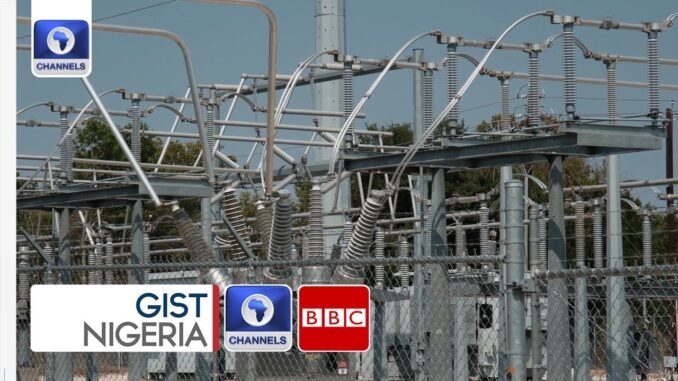

If you’ve been wondering where your hard-earned money goes every time NEPA (sorry, we mean the DisCos) takes your light and still sends you estimated bills, here’s your answer: straight into the pockets of Nigeria’s Electricity Distribution Companies.
According to the latest commercial performance data, the eleven DisCos operating across Nigeria collectively generated a staggering N600 billion in revenue during the first quarter of 2026 alone. Yes, you read that correctly—N600 billion in just three months!
The Irony of Darkness and Big Money
For the average Nigerian household and business owner, the first quarter of 2026 was yet another period of frustration. Rolling blackouts, estimated billing controversies, and hours—sometimes days—of darkness have become the unfortunate norm. Small business owners continue to spend fortunes on diesel and petrol for generators, while families sweat through hot nights without fans or air conditioning.
Yet, despite these persistent challenges and the widespread dissatisfaction with power supply, the DisCos somehow managed to rake in close to N600 billion. The question on every Nigerian’s mind is simple: How are they making so much money when we’re barely getting light?
Breaking Down the Numbers
The commercial performance data reveals that electricity distribution remains big business in Nigeria, regardless of service quality. This massive revenue comes from:
– Residential consumers who receive bills whether power is supplied or not
– Commercial and industrial users desperate for any available power
– Service charges and reconnection fees that seem to multiply mysteriously
– Estimated billing that often bears no relationship to actual consumption
While the DisCos celebrate these impressive figures, consumers continue to bear the brunt of an inefficient system that prioritizes revenue collection over service delivery.
The Cost of Poor Service
For context, N600 billion in three months translates to roughly N200 billion per month flowing into DisCo coffers. Meanwhile:
– Manufacturing companies are shutting down due to unreliable power supply
– The cost of doing business in Nigeria remains among the highest in Africa
– Families spend significant portions of their income on alternative power sources
– Nigeria’s economic growth is stunted by energy poverty
The telecommunications industry recently raised alarm about spending over N800 billion annually on diesel to power base stations. Imagine what Nigerian businesses and households are collectively spending on generators, fuel, and inverter systems because the DisCos cannot deliver reliable electricity despite their impressive revenues.
Where Is the Accountability?
These revenue figures raise critical questions about accountability in Nigeria’s power sector:
1. Are the DisCos reinvesting adequately in infrastructure? If they’re earning this much, why are transformers still blowing up regularly, and why do communities still experience weeks of blackouts?
2. What happened to service improvement promises? Every tariff increase comes with promises of better service. When will these promises materialize?
3. Is the regulatory framework working? The Nigerian Electricity Regulatory Commission (NERC) needs to explain how DisCos can earn so much while delivering so little.
What This Means for Nigerian Consumers
For the ordinary Nigerian, this news is both frustrating and revealing. It confirms what many have long suspected: the power sector dysfunction isn’t necessarily about lack of money—it’s about priorities, efficiency, and accountability.
The N600 billion revenue figure suggests that Nigerians are willing and able to pay for electricity. What they demand in return is simple: reliable power supply that matches what they’re paying for.
The Way Forward
As we move further into 2026, several things need to happen:
– Performance-based regulation: DisCos should only be allowed to collect revenue proportional to the service they deliver
– Transparent metering: Every consumer deserves an accurate meter, not estimated bills
– Infrastructure investment mandates: A significant percentage of DisCo revenue should be legally required to go toward infrastructure upgrades
– Consumer protection: Stronger mechanisms to ensure customers aren’t exploited through unfair billing practices
Final Thoughts
The N600 billion revenue generated by Nigerian DisCos in the first quarter of 2026 isn’t just a number—it’s a reflection of the broken social contract between service providers and consumers in Nigeria’s power sector.
Nigerians aren’t asking for free electricity. They’re simply demanding value for money. When you’re paying for a service that you rarely receive, it’s not business—it’s exploitation.
Until the DisCos begin to prioritize service delivery over revenue collection, and until regulators enforce real accountability, these impressive revenue figures will continue to ring hollow to the millions of Nigerians sitting in darkness, fanning themselves with cardboard, and wondering when—if ever—things will change.
What’s your experience with your local DisCo? Are you getting value for the money you pay? Share your thoughts in the comments below.
—
Have you experienced unfair billing or poor service from your electricity distribution company? You’re not alone. Stay informed about your rights as a consumer and the latest developments in Nigeria’s power sector.
More details? check buzzUp9ja
Be the first to comment