
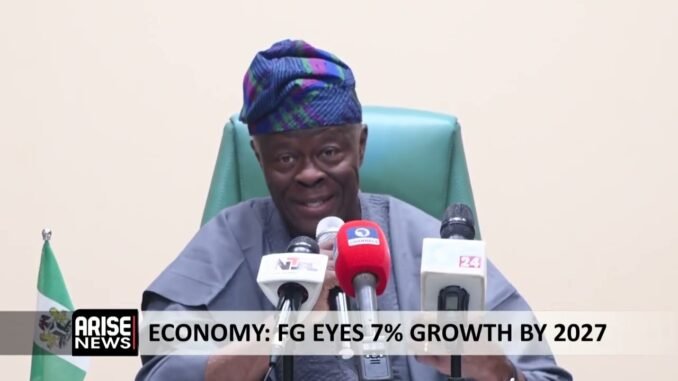

Summary: Finance Minister Taiwo Oyedele has declared Nigeria is targeting 7% GDP growth by 2027, while firmly shutting the door on any return of fuel subsidies. Here’s what this means for everyday Nigerians.
Nigeria’s economic leadership is setting its sights high. Finance Minister and Coordinating Minister of the Economy, Taiwo Oyedele*, has announced that the Federal Government is targeting a bold *7% economic growth rate by 2027 — and in the same breath, has made it crystal clear that the era of fuel subsidies is over for good.
The 7% Growth Target: Ambition or Reality?
For a country that has spent much of the last few years battling inflation, a weakened naira, and the growing pressure of everyday hardship on millions of Nigerians, a 7% GDP growth target is no small ambition. To put it in perspective, Nigeria’s economy has been crawling at figures well below that mark, meaning the government will need to fire on all cylinders to hit this number.
But Oyedele appears confident. The plan signals that Abuja is committed to pushing economic reforms aggressively — from tax restructuring to investment drives — as the administration of President Bola Tinubu looks to consolidate the gains of its controversial but sweeping economic overhaul.
Fuel Subsidy? That Door Is Firmly Shut
Perhaps the most pointed part of Oyedele’s statement was the outright rejection of any fuel subsidy comeback. Since President Tinubu famously declared “subsidy is gone” at his inauguration in May 2023, Nigerians have felt the full weight of that decision at the pump — with petrol prices skyrocketing and transportation costs dragging up the price of everything from garri to school fees.
Despite the public outcry and the immense pressure on low and middle-income households, the Finance Minister is standing firm. The government’s position is clear: the subsidy regime was fiscally unsustainable, draining billions of naira that could otherwise fund infrastructure, education, and healthcare.
What This Means for the Average Nigerian
For the man or woman hustling in Lagos traffic, grinding in Kano’s markets, or farming in the South-South, these announcements raise a simple but urgent question — when will this growth reach us?
The government’s bet is that by removing the subsidy, attracting foreign investment, and stabilising the macroeconomic environment, Nigeria can build a foundation for real, inclusive growth that ultimately puts more naira in the pockets of ordinary citizens.
Whether that vision translates to cheaper food prices, more jobs, and better infrastructure before 2027 remains to be seen. But one thing is certain — the Tinubu administration is doubling down on its reform agenda, consequences and all.
The Road Ahead
Nigeria has the potential. With a young, dynamic population, abundant natural resources, and a resilient entrepreneurial spirit that the world continues to admire, hitting 7% growth is not impossible. But it will require more than ministerial declarations — it will demand accountability, execution, and policies that genuinely touch the lives of everyday Nigerians.
The targets have been set. Now, Nigerians are watching — and waiting.
Stay informed. Share this article with someone who needs to understand what’s happening with Nigeria’s economy.
Explore more details on buzzUp9ja
Be the first to comment