
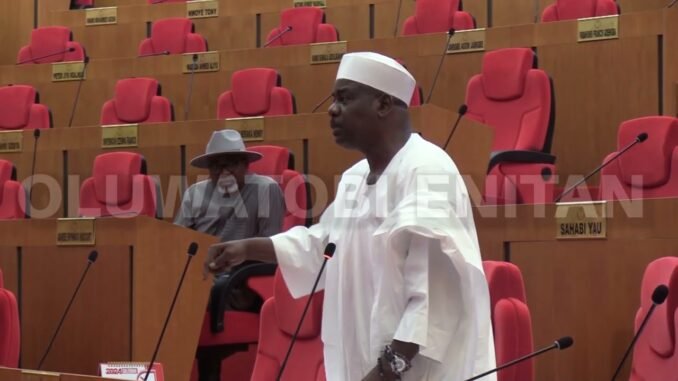

Summary: Senator Ali Ndume has sparked a heated debate after declaring that Nigerian citizens bear the responsibility for the poor leadership they constantly complain about. Here’s what he said and why it matters.**
It is easy to sit at a buka*, sip your zobo, and complain endlessly about how Nigeria’s leaders have failed the country. But Senator Ali Ndume, the lawmaker representing Borno South, has thrown a hot *akara ball right back into the laps of ordinary Nigerians — and his message is as uncomfortable as it is thought-provoking.
Speaking on Wednesday, September 16, at a public presentation, Ndume pulled no punches when he declared that Nigerians are largely to blame for the irresponsible leaders they spend so much time complaining about.
In his words: “You put garbage in. You’re to be blamed.”
—
The Senator’s Argument: We Chose Them, We Own Them
Ndume’s point is straightforward — democracy gives the power of choice to the people. When Nigerians troop to the polls and elect candidates based on ethnic loyalty, stomach infrastructure (those famous eba and bags of rice distributed during campaigns), or simply out of apathy and manipulation, they are setting themselves up for the exact kind of leadership they later protest against.
It is the classic case of “as e dey go, na so e go be” — what you put into the system is exactly what you will get out of it.
—
A Hard Truth Many Nigerians Don’t Want to Hear
Let’s be honest with ourselves for a moment. How many times have we watched a known corrupt politician return to power simply because he “brings development to our people”? How many communities have sold their votes for a few thousand naira, only to spend the next four years suffering under the same leadership they empowered?
The senator’s statement, while controversial, touches on a reality that political analysts and civil society groups have long pointed out — voter accountability is the backbone of any functional democracy.
When citizens vote along tribal lines, ignore a candidate’s track record, or worse, don’t vote at all, they essentially hand the keys of governance to whoever is most willing to manipulate the system.
—
But Is It Really That Simple?
Of course, many Nigerians will — and rightfully should — push back on this narrative.
A hungry man in Kano or a young graduate in Lagos who cannot find a job is not exactly voting from a position of free will. The systemic issues of voter intimidation, ballot manipulation, and a compromised electoral process mean that the average Nigerian’s vote does not always count the way it should.
Many Nigerians will argue: “Oga Senator, we voted, but were our votes counted?”
INEC controversies, court-upturned election results, and heavily militarised polling units are realities that cannot simply be swept under the carpet with a “you are to blame” statement.
—
The Bigger Picture: Civic Education Is Key
Whether you agree with Ndume or not, his statement opens up an important national conversation. Nigeria needs citizens who:
– Demand accountability from their elected officials at every level
– Research candidates beyond their party affiliation or ethnic background
– Resist vote-buying — those bags of rice will finish in two weeks; bad governance lasts four years
– Participate actively in civic processes beyond just Election Day
– Hold INEC and institutions accountable to ensure votes actually count
—
The Bottom Line
Senator Ndume’s statement is a sharp reminder that democracy is not a spectator sport. While the Nigerian political system is far from perfect, and structural barriers to genuine electoral participation are very real, citizens must also own their role in the cycle of poor leadership.
As the popular Yoruba saying goes: “Agbajo owo la fi n soya” — it takes collective effort to achieve anything meaningful.
The question now is: will Nigerians continue to point fingers, or will they begin to demand — and vote for — the leadership they truly deserve?
The conversation has started. Now it’s your turn — drop your thoughts in the comments below.
For more information, check buzzUp9ja
Be the first to comment