
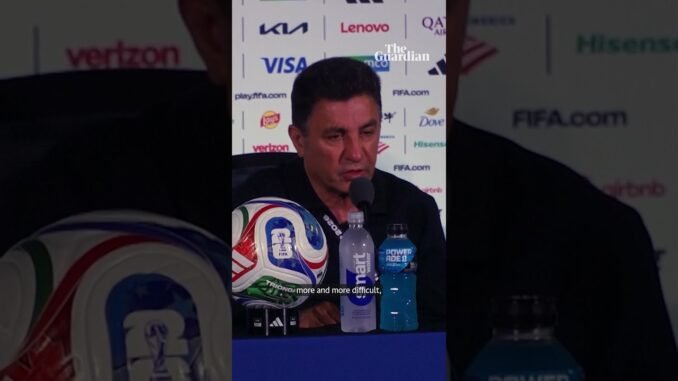

In a development that has sparked conversations across global football circles, Iran’s national team coach, Amir Ghalenoei, has come forward with serious allegations about his squad’s treatment during their recent World Cup qualifying campaign in North America.
The Team Persia boss didn’t mince words when he described his side as the “most oppressed” team in the ongoing World Cup qualifiers, following an incident that saw the entire squad immediately deported after their match in the United States.
What Happened in Los Angeles?
According to Ghalenoei, the Iranian contingent was given marching orders to leave Los Angeles without delay after their 2-2 stalemate against New Zealand on Monday night. This decision came as a shock to the team, who had originally scheduled to remain in the city as part of their North American tour preparations.
The immediate expulsion meant the squad had to quickly pack their bags and head straight back to Mexico, disrupting their carefully planned training and recovery schedule. For a team competing at the highest level of international football, such sudden changes can significantly impact performance and team morale.
A Pattern of Discrimination?
This isn’t the first time Iranian athletes have raised concerns about their treatment while competing abroad, particularly in Western nations. The intersection of sports and geopolitics has long been a contentious issue, with athletes often finding themselves caught in the crossfire of international tensions.
Ghalenoei’s choice of words – calling his team the “most oppressed” – speaks volumes about the frustrations building within the Iranian camp. For players who simply want to focus on their football and represent their nation with pride, these off-field distractions can be particularly draining.
The Impact on World Cup Preparations
The timing of this incident couldn’t be worse for Iran. World Cup qualifying campaigns demand consistency, proper rest, recovery, and focused preparation. Being forced to make unexpected travel arrangements, dealing with the stress of sudden deportation, and managing the logistical nightmare that follows can seriously undermine a team’s competitive edge.
Nigeria’s own Super Eagles have faced their share of travel and accommodation issues during international competitions, so there’s likely some sympathy from the Nigerian football community for what Team Melli is experiencing. Every African football fan knows how external factors beyond players’ control can derail even the most talented squads.
The Bigger Picture
This incident raises important questions about how international football governing bodies handle the participation of teams from countries with strained diplomatic relations with host nations. Should politics have a place in football? FIFA has long maintained that sport should remain separate from political considerations, but incidents like this suggest that ideal remains far from reality.
For Iran – a footballing nation with genuine World Cup ambitions and a squad featuring players from top European leagues – such treatment feels particularly harsh. The team has legitimate aspirations of making noise on the global stage, and they deserve the same professional treatment afforded to other qualifying nations.
Moving Forward
As Iran continues their World Cup qualifying campaign, this incident will undoubtedly serve as extra motivation. Sometimes, the best response to perceived injustice is success on the pitch. The Iranian players and coaching staff will be eager to let their football do the talking in upcoming fixtures.
For Nigerian football fans watching from afar, this story serves as a reminder of the complex challenges national teams face beyond just winning matches. It’s a testament to the resilience required not just in football, but in international competition generally.
The world will be watching to see how this situation develops and whether football’s governing bodies take any steps to ensure smoother operations for all participating nations, regardless of their political standing on the global stage.
What are your thoughts on this development? Should politics and sports remain completely separate? Share your views in the comments below.
Stay tuned for more on buzzUp9ja
Be the first to comment