
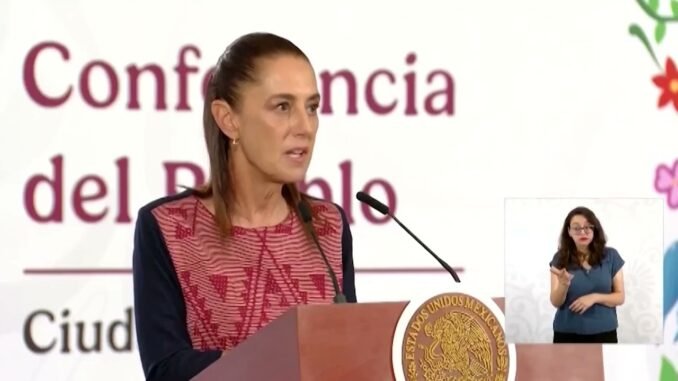

In a stunning development that has sent ripples through the international football community, Mexican President Claudia Sheinbaum announced on Monday, May 25, that her country will host Iran’s national football team during the upcoming World Cup after the United States refused them entry.
The decision highlights the complex intersection of sports and international politics, reminiscent of similar situations African nations have faced when geopolitical tensions threatened to derail athletic competitions.
A Gesture of Solidarity
President Sheinbaum’s announcement came as a relief to the Iranian squad, who found themselves caught in diplomatic crossfire just as they prepared for football’s biggest stage. The Mexican government’s willingness to accommodate the team demonstrates how sports can sometimes transcend political boundaries—a principle many Nigerian football fans understand well from our own experiences on the continental and global stage.
“Our government has agreed to allow the Iranian national football team to stay in Mexico during the World Cup,” Sheinbaum confirmed, though she did not elaborate on the specific reasons behind the United States’ refusal to host the team.
What This Means for the Tournament
The situation raises important questions about how international sporting events should be managed when political tensions arise between nations. For Nigerian football enthusiasts who have watched the Super Eagles navigate various challenges on and off the pitch, this scenario feels all too familiar.
The World Cup, traditionally seen as a unifying global event, occasionally becomes a stage where diplomatic disputes play out alongside the beautiful game. Mexico’s intervention ensures that the Iranian players can focus on their preparation and participation without the distraction of accommodation uncertainties.
A Lesson in Sports Diplomacy
This development offers valuable lessons about the role of neutral parties in international sports. Just as Nigeria has often championed fairness and inclusion in African football governance, Mexico’s decision reflects a commitment to ensuring that political disagreements don’t prevent athletes from competing.
As the tournament approaches, all eyes will be on how this situation develops and whether it impacts the team’s performance on the pitch. For now, Iranian footballers can breathe easier knowing they have a place to call home during the competition.
What are your thoughts on mixing politics with sports? Should countries be obligated to host World Cup teams regardless of diplomatic relations? Share your views in the comments below.
Get more updates on buzzUp9ja
Be the first to comment