
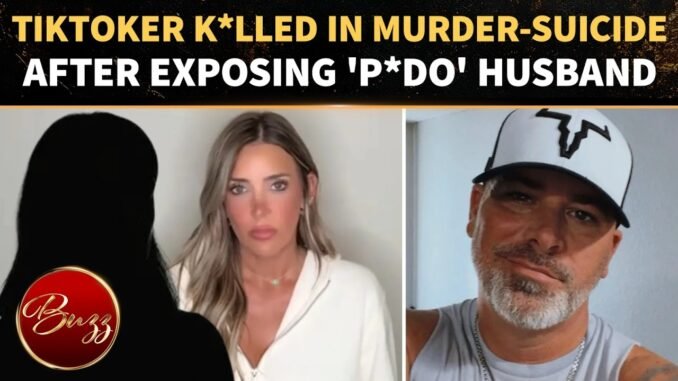

Summary: *American social media influencer Sara Gilson was tragically killed by her estranged husband just two weeks after she publicly accused him of child molestation on TikTok. Here is the full story.*
In a chilling case that has sent shockwaves across social media platforms worldwide, American TikTok influencer Sara Gilson was brutally murdered by her estranged husband — and the timing is nothing short of devastating. Less than two weeks after she bravely stepped in front of her camera to expose him as a suspected child molester, Sara was gone.
This is the kind of story that reminds us all — whether you are in Lagos, Abuja, or anywhere else in the world — that speaking truth to power, especially when that power sleeps in your own bedroom, can come at the most terrible cost.
What Happened to Sara Gilson?
Sara Gilson, a social media content creator, was fatally shot on Thursday, July 23, by her estranged husband. The shooting took place in what has been described as a targeted attack — a direct and violent response to her decision to go public with serious allegations against him.
Just days before her death, Sara had taken to TikTok — one of the world’s most-watched platforms — to publicly reveal that her husband had been accused of molesting a minor. It was a bold, courageous move. She used her platform not to post dance videos or lifestyle content, but to sound an alarm that she clearly believed the world needed to hear.
Sadly, it appears that decision sealed her fate.
She Spoke Up — And Was Silenced Forever
Many of us have seen how social media has empowered women — and indeed men — to speak their truth without waiting for mainstream media or authorities to act. Sara did exactly that. She looked into that camera and said what needed to be said.
But her estranged husband, rather than face accountability, chose the most cowardly path imaginable.
This is a pattern that women’s rights advocates across the globe — including right here in Nigeria — have long warned about. When abusers feel cornered or exposed, the danger to their victims escalates dramatically. Domestic violence experts consistently point out that the period when a woman leaves or exposes an abusive partner is often the most dangerous time of her life.
Sara Gilson lived — and died — as proof of that painful reality.
The Bigger Conversation We Must Have
Back home in Nigeria, stories like this are not entirely foreign to us. We have seen women silenced for speaking out against powerful men. We have watched families pressure abuse survivors to “keep quiet” for the sake of family honour. We have witnessed how those who dare to expose wrongdoing — especially when children are involved — are often treated as the problem rather than the person raising the alarm.
Sara’s story should challenge every single one of us to ask:
– Are we creating safe spaces for abuse survivors to speak out?
– Are we taking allegations of child molestation seriously when they are raised?
– Are we protecting women who have the courage to expose dangerous men?
The answer, in too many cases, is a painful no.
A Life Cut Short
Sara Gilson was more than an influencer. She was a woman who, in her final days, chose to prioritise the safety of a child over her own security. That takes a level of courage that deserves recognition, not a bullet.
As investigations continue into her murder, the world is watching. Her followers are grieving. And her story is already becoming a rallying cry for those who believe that women must be better protected when they choose to speak out against abuse.
Final Thoughts
As Nigerians, we love our social media. We celebrate our influencers. We share their content, follow their journeys, and mourn when they fall. But Sara Gilson’s story must be more than just a trending topic that we scroll past.
Let it be a reminder to support survivors* when they speak. Let it push us to *believe children when they report abuse. And let it fuel the conversation about making our communities — both online and offline — safer for those who dare to tell the truth.
Rest in peace, Sara Gilson. Your voice mattered. It still does.
If you or someone you know is experiencing domestic violence or abuse, please reach out to relevant support organisations in your area. In Nigeria, contact the WARIF Helpline: 08000WARIF (0800092743) for support.
Discover more headlines on buzzUp9ja
Be the first to comment