
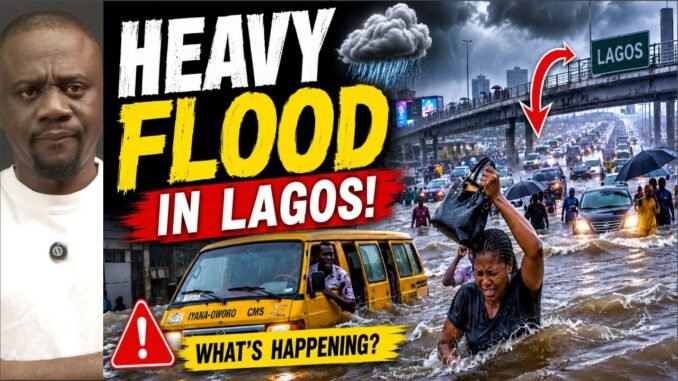

When Lagos rain shows its true colours, the ripple effects can be serious. Some parts of Lagos State have been plunged into darkness after flooding submerged key transmission substations, disrupting power supply and safety operations. In a statement, the Transmission Company of Nigeria (TCN) declared force majeure, citing the impact of the flood on its facilities.
What’s going on?
– Intense flooding in parts of Lagos led to waterlogging around transmission infrastructure.
– Some substations were reportedly submerged, triggering emergency shutdowns to protect equipment and lives.
– The result: power outages in affected communities while technicians assess damage and wait for water levels to recede.
Why this matters
– Safety first: Energizing flooded equipment is dangerous and can lead to fires, electrocution, or bigger system failures.
– Longer restoration timelines: Even after the water clears, equipment checks, drying, and repairs may be needed before power is safely restored.
– Wider impacts: From small businesses that rely on “I better pass my neighbour” generators to commuters stuck in flooded traffic, the blackout compounds the usual rainy-season wahala.
What you can do while waiting
– Unplug sensitive appliances to protect them from voltage surges when power returns.
– Use generators with proper ventilation; never run them indoors or in enclosed spaces.
– Conserve fuel and battery power—prioritize essentials like lighting, charging phones, and refrigeration.
– Stay off flooded areas around electrical installations, poles, or downed lines. Report hazards to your local DisCo immediately.
– Get updates from TCN and your distribution company’s official channels and verified social media pages.
What to expect next
– Drain, inspect, restore: Once floodwaters recede, engineers will assess substations, test equipment, and restore supply in phases.
– Incremental power return: Some neighbourhoods may get light sooner than others depending on damage levels and network configuration.
– Possible load management: Expect controlled load shedding as the grid stabilizes.
Bigger picture: Floods and the power grid
Lagos is no stranger to flash floods—blocked drains, low-lying zones, and heavy downpours often combine to stress both roads and power infrastructure. Strengthening drainage, elevating critical equipment, and improving emergency response are long-term steps that can reduce disruptions like this. In the meantime, community awareness and safety-first habits go a long way.
Final word
Eko no dey carry last, but safety must lead the way. As TCN and DisCos work to restore power, stay informed, stay safe, and protect your appliances. If you notice fallen lines or electrical hazards, keep your distance and report immediately.
For more information, check buzzUp9ja
Be the first to comment