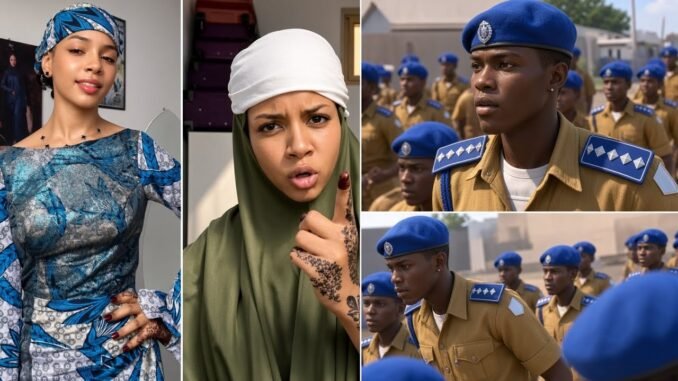

The Kano State Hisbah Board has made waves again — this time, their target is the internet.
The Kano State Hisbah Board recently arrested popular TikToker Amani Ishaq alongside two other women, following allegations that they uploaded videos deemed to be in violation of the state’s moral and religious standards.
What Happened?
The trio were picked up by the Hisbah — Kano’s Islamic morality police — over dance videos they reportedly shared on TikTok, which authorities described as “immoral” and inconsistent with the values upheld in the predominantly Muslim state.
This is not the first time the Hisbah has flexed its authority in the digital space. As social media continues to grow rapidly across northern Nigeria, the board has increasingly turned its attention to online content, signalling that what you post on the internet is no longer beyond their reach.
Social Media Meets Sharia
For many young Nigerians in the north, TikTok has become a platform for self-expression, entertainment, and even business. But in Kano — a state governed under Sharia law — the boundaries of acceptable content remain tightly defined by religious and cultural expectations.
The arrest of Amani Ishaq, who had built a following on the platform, serves as a stark reminder that digital freedom in some parts of Nigeria comes with significant limitations.
Reactions from Nigerians
As expected, the news has sparked fierce debate online. While some Nigerians — particularly from the south — have expressed outrage, describing the arrests as an infringement on personal freedom and freedom of expression, others in the north have backed the Hisbah’s action, arguing that it is necessary to preserve the region’s cultural and religious identity.
The conversation once again highlights the deep cultural and religious divide that continues to shape life and law across Nigeria’s geopolitical zones.
What Happens Next?
As of the time of this report, details regarding the charges, possible prosecution, or release of the arrested women remain unclear. The Hisbah Board has not issued a comprehensive public statement beyond confirming the arrests.
One thing is certain — this case will continue to fuel the ongoing national conversation about freedom of expression, social media regulation, and the role of morality enforcement in a democratic Nigeria.
—
Stay with buzzUp9ja for updates as this story develops.
Be the first to comment