
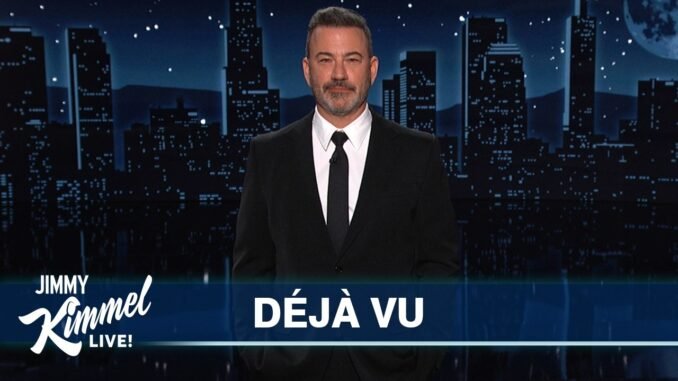

The political tension between America’s White House and Hollywood has reached boiling point as US First Lady Melania Trump publicly demanded that ABC Television terminate late-night talk show host Jimmy Kimmel following what she described as a “hateful and violent” comedy monologue.
The Controversy That Has America Talking
In a strongly worded statement that has set American social media ablaze, the First Lady didn’t mince words about her displeasure with the popular comedian’s recent show segment. For those familiar with Nigerian entertainment dynamics—where comedians like Basketmouth and AY occasionally find themselves in hot water over jokes—this situation mirrors similar tensions, but with far higher stakes given the personalities involved.
Jimmy Kimmel, who hosts “Jimmy Kimmel Live!” on ABC, has built a reputation over the years for his sharp political commentary and satirical takes on current events. However, his recent monologue appears to have crossed a line in Mrs. Trump’s view.
What Makes This Different?
Unlike typical back-and-forth between entertainers and political figures that Nigerians have witnessed even in Nollywood circles, this public call for dismissal represents an escalation that many observers find concerning. In Nigeria, we’ve seen celebrities and politicians clash on social media, but direct demands for job termination from the highest office remain relatively rare.
The First Lady’s statement marks a significant moment in the ongoing conversation about where the boundaries of comedy and political satire should lie—a debate that transcends American borders and resonates globally, including here in Nigeria where comedians must carefully navigate ethnic, religious, and political sensitivities.
The Bigger Picture: Free Speech vs. Responsibility
This incident raises important questions about the balance between freedom of expression and responsible broadcasting. In Nigeria, the National Broadcasting Commission (NBC) regularly monitors content for offensive material, and we’ve seen numerous stations sanctioned or temporarily shut down for violations.
The American context operates differently, with stronger constitutional protections for free speech, making Mrs. Trump’s demand all the more controversial. Many Americans view such calls from government officials as potential threats to press freedom and artistic expression.
ABC’s Dilemma
The television network now finds itself in a difficult position. ABC must weigh multiple factors: their commitment to creative freedom, their relationship with one of their most popular hosts, potential backlash from either supporting or dismissing Kimmel, and the unprecedented nature of a First Lady’s public demand for an entertainer’s termination.
For context, imagine if the wife of Nigeria’s president publicly called for the removal of a popular comedian from their television show—the ripple effects would be enormous across the entertainment industry and beyond.
What Happens Next?
As of now, neither ABC nor Jimmy Kimmel has issued an official response to Mrs. Trump’s demand. Industry watchers are closely monitoring the situation, as the outcome could set important precedents for how media companies respond to pressure from political figures.
The entertainment and political worlds remain on edge, waiting to see whether ABC will stand by their host, issue an apology, or take some other action. Meanwhile, public opinion appears divided along familiar political lines, with supporters of the Trump family echoing the First Lady’s concerns and critics defending Kimmel’s right to satirical commentary.
The Nigerian Perspective
For Nigerian audiences watching this drama unfold, it serves as a reminder that even in countries with long democratic traditions, tensions between political power and media freedom remain constant challenges. It also highlights how quickly a comedy segment can transform into a major political controversy—something Nigerian entertainers understand all too well.
As this story develops, it will likely continue generating heated discussions about the proper boundaries of political humor, the role of late-night comedy in democratic discourse, and whether public figures should use their platforms to pressure media companies regarding content they find objectionable.
One thing is certain: the intersection of entertainment and politics remains as volatile and unpredictable as ever, whether in America or Nigeria.
—
What do you think? Should comedians face consequences for controversial political jokes, or does this cross the line into censorship? Share your thoughts in the comments below.
For more information, check buzzUp9ja
Be the first to comment