
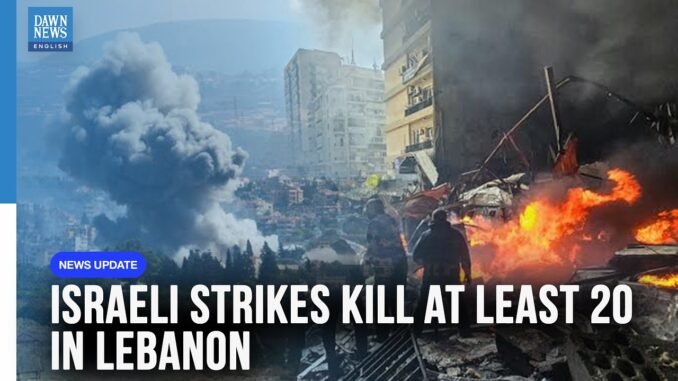

In a devastating turn of events that has cast serious doubts on the fragility of Middle Eastern peace agreements, Israeli military operations in Lebanon have claimed the lives of at least 20 people, according to Lebanon’s state news agency NNA. The strikes occurred barely 24 hours after a ceasefire agreement with Hezbollah was implemented, meant to bring an end to months of escalating violence in the region.
A Fragile Peace Shattered
The timing of these strikes has raised eyebrows across the international community. Just when many hoped that the ceasefire would mark the beginning of lasting peace between Israel and Hezbollah, the reality on the ground tells a different story entirely. For those of us watching from Nigeria, this situation mirrors the challenges we’ve faced in our own conflicts—ceasefires are only as strong as the commitment of both parties to honor them.
The ceasefire agreement, which had been brokered through international mediation, was supposed to provide relief to civilians caught in the crossfire and create space for diplomatic solutions. Instead, families in Lebanon are mourning their loved ones, and the hope for peace seems as distant as ever.
Understanding the Context
For months, tensions between Israel and Hezbollah have been building, with both sides engaging in military actions that have resulted in casualties and displacement of civilians. The ceasefire was seen as a crucial step toward de-escalation, but Saturday’s strikes demonstrate how quickly such agreements can unravel.
The loss of 20 lives in a single day is not just a statistic—it represents 20 families torn apart, children who will grow up without parents, and communities traumatized by ongoing violence. As Nigerians who understand the value of peace and the cost of conflict, we can empathize with the suffering of ordinary Lebanese citizens caught in circumstances beyond their control.
Questions About Implementation
The strikes have raised critical questions about the terms of the ceasefire and whether all parties were truly committed to its implementation. Was there a grace period? Were the strikes in response to perceived violations? Or does this indicate that one or both parties never truly intended to honor the agreement?
These are questions that demand answers, not just for the sake of those directly affected, but for the credibility of international peacekeeping efforts everywhere. When ceasefires are violated so quickly after being announced, it undermines trust in the entire peace process.
The Human Cost
Beyond the geopolitics and military strategies, we must remember the human beings at the center of this crisis. Twenty people woke up on Saturday morning not knowing it would be their last day. Their families are now planning funerals instead of celebrating the beginning of peace.
This tragedy reminds us that conflicts in distant lands affect real people with hopes, dreams, and families—just like us. As a global community, we must continue to advocate for peaceful resolutions to conflicts and hold parties accountable when they violate agreements meant to protect civilian lives.
What Happens Next?
The international community now faces difficult decisions about how to respond to these strikes. Will there be renewed efforts to salvage the ceasefire, or has trust been irreparably damaged? The coming days will be crucial in determining whether this ceasefire can be resurrected or whether the region is headed for further escalation.
For now, the families of the 20 victims are left to grieve, and the people of Lebanon must wonder whether peace will ever truly come to their troubled land.
As this situation continues to develop, the world watches and waits, hoping that cooler heads will prevail and that the pursuit of peace will ultimately triumph over the cycle of violence.
Stay updated for more on buzzUp9ja
Be the first to comment