
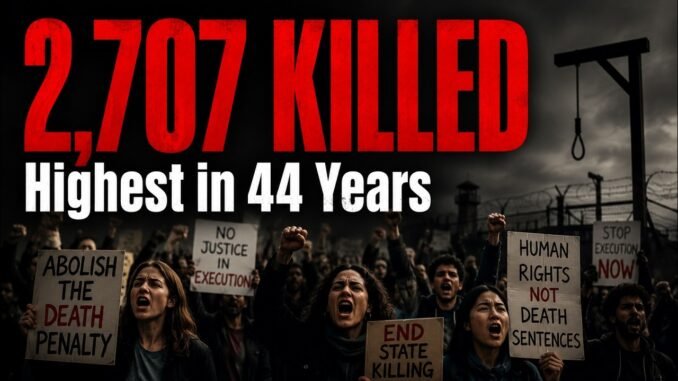

Summary: Amnesty International reports Iran executed over 2,150 people in 2025, driving global execution numbers to their highest level since 1981. Nigeria also features in the grim statistics.
The world witnessed a disturbing surge in state-sanctioned killings last year, with Iran leading the charge in what has become the deadliest year for executions since 1981, according to a damning report by Amnesty International.
The London-based human rights organization revealed that Iran alone executed more than 2,150 people in 2025, accounting for the bulk of a global spike that has alarmed activists and observers worldwide.
A Grim Milestone for Human Rights
Released on Monday, Amnesty’s comprehensive report paints a troubling picture of capital punishment trends across the globe. The figures represent not just numbers on a page, but thousands of lives cut short by state machinery—many under questionable circumstances and after trials that human rights groups say failed to meet basic fairness standards.
Iran’s staggering execution count didn’t just contribute to the global total—it dominated it. The Islamic Republic’s aggressive use of the death penalty has drawn condemnation from international bodies, with critics pointing to the systematic execution of political dissidents, ethnic minorities, and individuals convicted of drug-related offenses under laws many consider draconian.
What This Means for Global Human Rights
The 2025 figures mark a significant reversal in what had been a gradual worldwide trend toward abolishing or reducing capital punishment. For context, the last time execution numbers reached such heights was during the early 1980s, a period marked by authoritarian crackdowns and political upheavals in various parts of the world.
Human rights advocates warn that this resurgence signals a troubling disregard for the sanctity of life and due process in several nations. The death penalty, they argue, is often applied disproportionately against vulnerable populations, including the poor, minorities, and political opponents.
Nigeria’s Position on Capital Punishment
While Nigeria wasn’t highlighted as a primary contributor in this report, the country maintains capital punishment on its books, primarily for offenses including murder, armed robbery, and treason. However, there’s been a de facto moratorium in many Nigerian states, with executions being relatively rare in recent years compared to countries like Iran, Saudi Arabia, and China.
The conversation around capital punishment in Nigeria remains divided. Some Nigerians view it as a necessary deterrent against serious crimes in a country grappling with security challenges. Others, including local human rights organizations, argue for its complete abolition, citing concerns about wrongful convictions, the irreversibility of execution, and the system’s potential for abuse.
Regional and Global Implications
The Amnesty report comes at a time when Africa and the world are grappling with questions about justice, human rights, and the role of the state in determining life and death. Countries like Ghana, Benin, and Burkina Faso have abolished the death penalty in recent years, joining a growing global movement toward alternative forms of justice.
For Nigerians watching these developments, the question remains: what direction should our country take? As global human rights standards evolve and the evidence against capital punishment’s effectiveness as a deterrent mounts, the debate over Nigeria’s continued use of this ultimate punishment is likely to intensify.
The Path Forward
Amnesty International’s report serves as a stark reminder that while many nations are moving away from state executions, others are doubling down. The organization continues to call for a worldwide moratorium on the death penalty, arguing that no judicial system is infallible, and the cost of error is simply too high.
As Nigeria continues to develop its justice system and engage with international human rights frameworks, the conversation about capital punishment deserves serious national attention. The lives lost globally in 2025—and Iran’s troubling dominance of those numbers—should prompt reflection on the kind of justice system we want to build for future generations.
What are your thoughts on capital punishment in Nigeria and globally? Should it be abolished completely, or does it serve a necessary purpose? Share your views in the comments below.
For more information, check buzzUp9ja
Be the first to comment