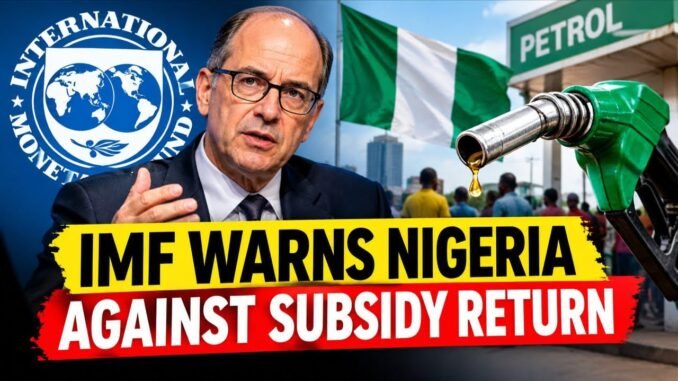

The International Monetary Fund has issued a stern warning to Abuja — reversing the fuel subsidy removal could do more damage than good, and here’s why Nigerians need to pay attention.
The International Monetary Fund (IMF) has thrown its weight behind the Federal Government’s decision to remove the petrol subsidy, warning that any move to restore the blanket fuel subsidy would be “regressive” — meaning it would ultimately hurt ordinary Nigerians more than it helps them.
Instead of going back to the old ways, the global financial body is recommending that the government channel support directly to the most vulnerable Nigerians, rather than subsidising fuel prices across the board.
Why the IMF Says “No” to Bringing Back the Subsidy
For years, Nigeria’s fuel subsidy was sold to Nigerians as a gift from the government — cheap petrol at the pump. But economists and international bodies like the IMF have long argued that this arrangement was deeply flawed.
Here’s the hard truth: the people who benefited most from cheap fuel were not the everyday wananchi hustling in Kano, Aba, or Ajegunle. They were wealthy Nigerians who own multiple cars, businesses with large generator fleets, and fuel marketers who turned the arbitrage into a lucrative racket.
The poor man trekking to work or squeezing into a danfo? He saw little to no real benefit.
This is exactly what the IMF means when it calls a broad subsidy “regressive” — it sounds like it helps everyone, but in reality, it disproportionately favours those who are already comfortable.
So What Should Nigeria Do Instead?
Rather than pouring billions of naira into a system riddled with corruption and inefficiency, the IMF is pushing for targeted support — direct interventions that put money or relief into the hands of Nigerians who truly need it.
Think along the lines of:
– Direct cash transfers to low-income households
– Subsidised public transportation to ease the burden of high fuel costs
– Social investment programmes that reach the grassroots
This approach ensures that the naira spent on welfare actually gets to the mama selling akara by the roadside, not into the pockets of subsidy cabal middlemen.
What This Means for the Average Nigerian
Let’s keep it real — fuel prices have been biting hard since the subsidy removal in 2023. Transport fares have skyrocketed, the cost of goods has surged, and many Nigerians are genuinely struggling to cope.
The frustration is valid. The pain is real.
But the IMF’s position is essentially this: going back is not the answer. Restoring the old subsidy regime would reignite the same corruption, drain the nation’s finances, and once again benefit the wrong people — while leaving the truly vulnerable out in the cold.
The real fight, therefore, should not be “bring back subsidy”* but rather *”make sure the savings from subsidy removal actually reach ordinary Nigerians.”
The Bigger Picture
Nigeria spent an estimated ₦4 trillion* on fuel subsidies in 2022 alone. That’s money that could have built hospitals, schools, and roads across all 36 states. The question Nigerians must demand their leaders answer is: *now that the subsidy is gone, where is the money going?
The IMF has given its advice. The Federal Government must now show Nigerians that the painful removal of fuel subsidy was truly in their interest — not just a policy talking point.
Until that accountability arrives, the debate will continue — and rightly so.
What do you think? Should Nigeria explore targeted cash transfers, or is there a better way to protect ordinary citizens from the impact of subsidy removal? Drop your thoughts in the comments.
For more info, check buzzUp9ja
Be the first to comment