

—
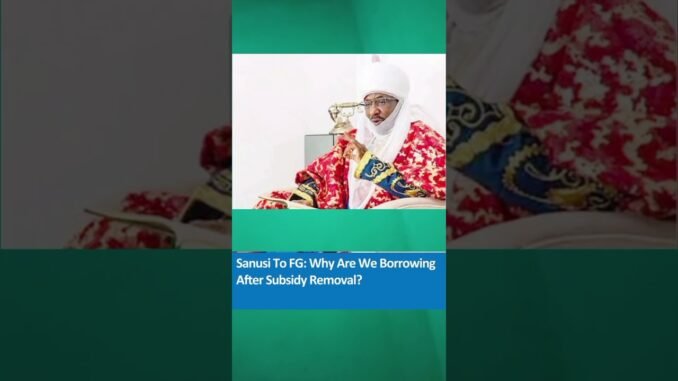
The Emir of Kano, Muhammadu Sanusi II, has thrown a big question at the Tinubu-led federal government—one that many Nigerians have been asking quietly in their homes, at bus stops, and in market squares across the country.
Speaking at a recent public event, the highly respected former Central Bank Governor didn’t mince words as he queried why Nigeria is still going cap-in-hand to borrow money from foreign agencies even after removing the controversial fuel subsidy that was supposedly bleeding the nation dry.
The Question on Every Nigerian’s Mind
“If you’re not paying the subsidy and you’ve got the money, why are we still borrowing?” Emir Sanusi asked, echoing the confusion and frustration felt by millions of Nigerians who have tightened their belts since the subsidy removal.
When President Bola Ahmed Tinubu announced the removal of fuel subsidy on May 29, 2023—with his now-famous “subsidy is gone” declaration—Nigerians were told to endure the hardship because the government would finally have money to develop infrastructure, improve healthcare, fix our roads, and transform the economy.
Petrol prices jumped from around ₦195 per litre to over ₦600 in most parts of the country. Transportation costs skyrocketed. The price of everything—from tomatoes to school fees—went through the roof. Nigerians grumbled, complained, protested, but many held on to the hope that this sacrifice would yield results.
So Where is the Subsidy Money?
Emir Sanusi’s question hits at the heart of Nigeria’s current economic puzzle. According to government figures, Nigeria was spending trillions of naira annually on fuel subsidy. The removal of this burden should have freed up massive amounts of money for the government to spend on critical needs.
Yet, reports continue to emerge of Nigeria seeking loans from the World Bank, African Development Bank, China, and other international lenders. The country’s debt profile keeps climbing, currently standing at over ₦87 trillion as of recent reports.
For the average Nigerian struggling to feed their family, pay school fees, or afford transportation to work, this doesn’t make sense. “We don carry suffer for head, make them tell us where the money dey,” as one Lagos trader put it.
Sanusi: A Voice Nigeria Listens To
It’s worth noting that when Muhammadu Sanusi II speaks on economic matters, Nigerians pay attention—and for good reason. As Governor of the Central Bank of Nigeria from 2009 to 2014, he built a reputation for speaking truth to power, even when it made him unpopular with politicians.
His famous whistleblowing about missing billions in oil revenue during the Jonathan administration showed his willingness to ask uncomfortable questions. Now, as Emir of Kano, one of Nigeria’s most influential traditional positions, his voice carries even more weight.
His latest comments reflect what many economists, civil society groups, and ordinary Nigerians have been questioning: the transparency and accountability around the so-called “subsidy savings.”
What This Means for Ordinary Nigerians
The implications of Emir Sanusi’s question extend far beyond economics textbooks and government policy papers. For the market woman in Onitsha, the okada rider in Port Harcourt, the civil servant in Abuja, and the student in Ibadan, this question touches their daily reality.
If Nigeria is still borrowing heavily despite subsidy removal, it means:
1. The debt burden keeps growing – and eventually, our children will have to pay it back
2. The promised development may not materialize as quickly as hoped
3. More austerity measures might be coming – possibly higher taxes or more subsidy removals
4. Accountability questions remain unanswered – where exactly is the subsidy money going?
The Call for Transparency
What Nigerians are asking for isn’t complicated. We want to see clear accounting of the funds that have been freed up by subsidy removal. We want to know:
– How much is being saved monthly?
– Where is this money being spent?
– Why is borrowing still necessary?
– What is the plan to reduce our debt burden?
These aren’t unreasonable questions. In fact, they’re the basic questions any responsible citizen should ask their government.
Moving Forward
As Nigeria navigates these challenging economic times, voices like that of Emir Sanusi serve as important checks on government power. His question isn’t just about borrowing—it’s about governance, accountability, and whether the sacrifices Nigerians are making are actually leading somewhere meaningful.
The Tinubu administration has an opportunity to provide clear, transparent answers to these questions. Nigerians have shown remarkable resilience and patience, but patience without accountability breeds frustration.
The ball is now in the government’s court. Nigerians are watching, waiting, and like Emir Sanusi, asking: “If you’re not paying the subsidy and you’ve got the money, why are we still borrowing?”
—
What do you think about Emir Sanusi’s question? Do you believe the government is being transparent about subsidy savings? Share your thoughts in the comments below.
Check buzzUp9ja for more news
Be the first to comment