
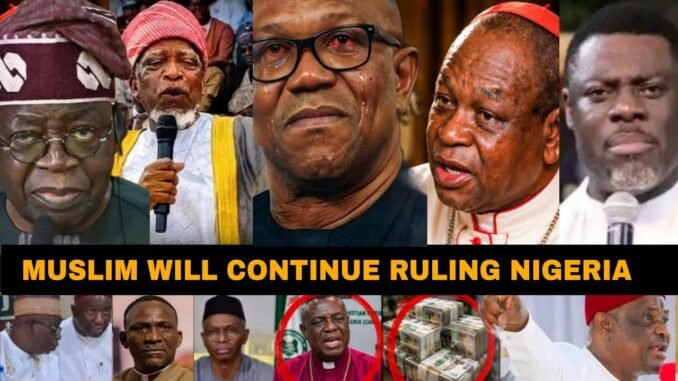

A prominent Islamic scholar doubles down on his controversial remarks, igniting fresh debate across Nigeria’s complex religious landscape.
—
Islamic cleric, Sheikh Sani Jingir, has made it clear that he is standing by his words — no apologies, no backtracking. The respected scholar, who recently stirred the hornet’s nest with his comments in support of a Muslim-Muslim presidential ticket in Nigeria, says he has absolutely zero regrets about what he said.
Jingir made this bold declaration while speaking at a mass wedding ceremony organised by the Kano State Government — an event meant to celebrate love and unity, but one that quickly became a platform for a much bigger national conversation.
Why His Words Are Shaking Tables
For many Nigerians, the idea of a Muslim-Muslim ticket is not just a political discussion — it cuts deep into the fabric of our nation’s delicate religious balance. Nigeria, as we all know, is a country where religion is not just personal faith; it is identity, community, and in many cases, the deciding factor when it comes to who gets your vote.
The cleric’s insistence on defending his position has reignited debate from Lagos Island to Maiduguri, from Enugu to Sokoto. Christians, political analysts, and even some Muslim voices have weighed in, with opinions flying in every direction on social media and in beer parlours alike.
The Bigger Picture
Nigeria has long operated on an unwritten but widely respected principle of balancing political tickets along religious and regional lines — a delicate dance meant to ensure that no single group feels shut out of governance. The North-South rotation, and by extension the Muslim-Christian balance on presidential tickets, has been a cornerstone of our political tradition since the return to democracy.
Critics argue that a Muslim-Muslim ticket would alienate millions of Nigerian Christians, particularly in the South, and deepen existing fault lines in an already divided polity. Supporters, on the other hand, contend that competence and shared values should matter more than religious arithmetic.
A Man of Conviction or Controversy?
Sheikh Jingir is no stranger to speaking his mind. Whether you agree with him or not, one thing is certain — he is not the type to bow to public pressure. His refusal to retract his statement signals that this conversation is far from over.
As Nigeria continues to navigate its complex identity as Africa’s most populous nation — home to both the largest Muslim and one of the largest Christian populations on the continent — remarks like these remind us that religion and politics in Nigeria remain deeply intertwined, for better or for worse.
—
What do you think? Should religious balance on presidential tickets remain a non-negotiable factor in Nigerian politics? Drop your thoughts in the comments section below.
Get more news on buzzUp9ja
Be the first to comment