
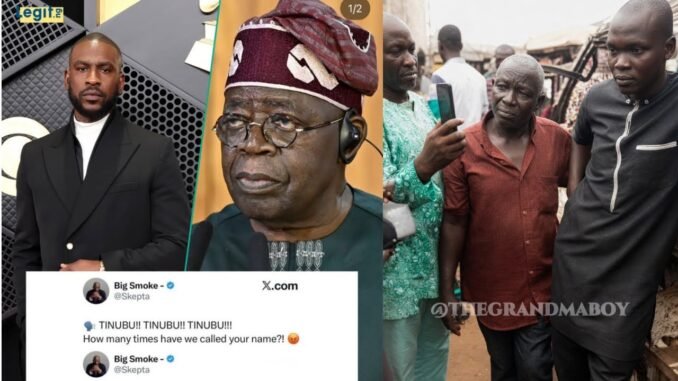

Summary: Nigerian-born British grime artist Skepta has taken to social media to question President Bola Tinubu about the severe economic challenges plaguing ordinary Nigerians. His emotional post has ignited massive reactions online.
The usually reserved Joseph Junior Adenuga, better known by his stage name Skepta, has broken his silence on Nigeria’s current economic situation, and Nigerians are listening.
The award-winning grime artist, who has never hidden his Nigerian roots despite being born and raised in Tottenham, London, took to X (formerly Twitter) to express his frustration with the hardship many Nigerians are experiencing under President Bola Ahmed Tinubu’s administration.
“How Much Suffering Is Enough?”
In a post that has since gone viral, Skepta posed a direct question to the Nigerian government, echoing the concerns of millions of citizens grappling with skyrocketing inflation, fuel price hikes, and the removal of subsidies that have left many families struggling to make ends meet.
The timing of Skepta’s intervention is significant. Nigeria is currently experiencing one of its most challenging economic periods in recent history. The naira has plummeted to record lows against the dollar, food prices have more than doubled in many markets, and transportation costs have made movement a luxury for average Nigerians.
A Voice From The Diaspora
Skepta’s decision to speak out carries particular weight. As someone who has achieved international success while proudly representing Nigerian culture in the global music scene, his voice resonates with both young Nigerians at home and those in the diaspora.
The rapper, who won the prestigious Mercury Prize in 2016 and has collaborated with the biggest names in music, has always maintained strong ties to his Yoruba heritage. He’s been spotted wearing traditional Nigerian attire at major events and has consistently championed Afrobeats and Nigerian artists on the international stage.
Social Media Erupts
As expected, Nigerians on social media have had plenty to say about Skepta’s post. The reactions have been mixed, with many applauding the artist for using his platform to highlight the struggles of ordinary people.
“Even Skepta wey dey UK don tire for our matter. That’s when you know things don spoil finish,” one user commented.
Others praised him for speaking up when many Nigerian celebrities have remained conspicuously silent about the economic hardship.
However, some critics questioned whether foreign-based Nigerians have the right to comment on local issues, arguing that those who don’t live in the country full-time cannot fully understand the complexities of governance.
The Larger Conversation
Skepta’s comment adds to a growing chorus of voices—both at home and abroad—questioning the direction of Nigeria’s economic policies. Since President Tinubu assumed office in May 2023, his administration has implemented several controversial reforms, including the removal of fuel subsidies and the floating of the naira.
While government officials argue these measures are necessary for long-term economic stability, the immediate impact on ordinary Nigerians has been severe. Many families can no longer afford basic necessities, and small businesses are closing due to unsustainable operating costs.
When Will Relief Come?
The question Skepta poses—”How much suffering is enough?”—is one that millions of Nigerians ask themselves daily. Parents skip meals to feed their children, students drop out of school because fees have tripled, and workers watch helplessly as their salaries lose value by the day.
For many Nigerians, the hope that things will improve “soon” is wearing thin. The promises of better days ahead ring hollow when the present reality is so harsh.
The Power of Celebrity Voice
Skepta’s intervention demonstrates the potential impact celebrities can have in drawing attention to social issues. While one tweet won’t solve Nigeria’s economic crisis, it amplifies the conversation and puts additional pressure on those in power to provide answers.
It also shows that Nigeria’s challenges are being watched—and felt—far beyond its borders. The diaspora community, which sends billions of dollars home in remittances annually, is deeply connected to and affected by what happens in Nigeria.
What Happens Next?
As this conversation continues to trend online, the question remains: Will the government respond to these growing concerns with concrete action, or will Skepta’s question join the long list of unanswered cries from Nigerians seeking relief?
For now, the post has achieved one thing—it has reminded everyone that the world is watching, and the patience of Nigerians, both at home and abroad, is wearing dangerously thin.
The ball is now firmly in the government’s court. How much suffering is truly enough?
—
What do you think about Skepta’s comments? Do celebrities have a responsibility to speak out on national issues? Share your thoughts in the comments below.
Follow for more news on buzzUp9ja
Be the first to comment