
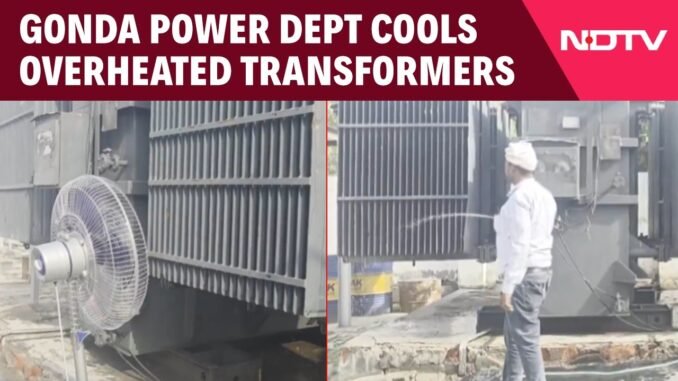

Summary: Power department officials in India’s Gonda district have become internet sensations after videos showed them pouring water on overheated transformers during extreme heat. Nigerians relate to the creative solution amid power challenges.
As temperatures soar across North India, power officials in Gonda district, Uttar Pradesh, have found themselves at the center of social media attention—and not exactly for reasons they’d prefer.
Videos circulating online show electricity department workers manually pouring buckets of water over overheated power transformers in what many are calling a “jugaad” (makeshift) solution to combat the effects of an intense heatwave.
When the Heat Becomes Unbearable—Even for Machines
The scorching temperatures sweeping through northern India have pushed power infrastructure to its limits. Transformers, which are critical for stepping down high-voltage electricity to levels safe for household use, have been overheating under the extreme conditions.
Rather than watching the equipment fail completely, officials in Gonda took matters into their own hands—literally. Armed with buckets and water, they’ve been dousing the transformers to bring temperatures down and keep the power flowing to residents.
Social Media Reacts: From Mockery to Empathy
The videos quickly went viral, sparking a mix of reactions across social media platforms. While some users poked fun at the unconventional cooling method, others expressed sympathy for the workers trying their best under challenging circumstances.
“This is what desperation looks like when infrastructure can’t keep up with climate change,” one Twitter user commented.
Many Nigerians who saw the videos couldn’t help but relate. “This looks like something NEPA would do back in the day,” joked one Nigerian on X (formerly Twitter), referencing the country’s own well-documented struggles with power supply and infrastructure challenges.
Others noted that the DIY approach, while far from ideal, showed the workers’ commitment to keeping electricity flowing during peak demand periods when people need it most.
Why Transformers Overheat
Transformers generate heat naturally during operation, but extreme ambient temperatures can push them beyond safe operating limits. When combined with increased power demand for air conditioning and cooling during heatwaves, the stress on these units multiplies.
Modern transformers typically have built-in cooling systems using oil circulation or forced air. However, in older or poorly maintained installations—or when temperatures exceed design specifications—these systems can become overwhelmed.
A Familiar Story for Nigerians
For many Nigerians watching from afar, the Gonda situation feels strikingly familiar. Nigeria’s own power sector has long struggled with aging infrastructure, inadequate maintenance, and the challenges of extreme weather conditions.
From generator maintenance in the sweltering heat to creative solutions for keeping equipment operational during the rainy season, Nigerians have developed their own “jugaad” mentality when it comes to power challenges.
The difference? While India’s incident sparked widespread documentation and discussion, similar improvisations in Nigeria often go unnoticed or have become so commonplace they no longer surprise anyone.
The Bigger Picture: Infrastructure Under Climate Stress
Beyond the viral moment, the Gonda incident highlights a serious issue: aging power infrastructure in developing nations is increasingly ill-equipped to handle the realities of climate change and extreme weather events.
As heatwaves become more frequent and intense across Africa and Asia, countries like Nigeria and India face similar challenges in maintaining reliable power supply. Investment in modern, climate-resilient infrastructure isn’t just about convenience—it’s becoming a necessity for basic services.
Lessons for Nigeria?
While the bucket-cooling method has attracted attention (and some ridicule), it also demonstrates resourcefulness in the face of crisis. However, temporary fixes can only go so far.
For Nigeria’s power sector, which continues its journey toward privatization and modernization, the Gonda story serves as a reminder that infrastructure upgrades cannot be postponed indefinitely. As temperatures rise across West Africa, our own transformers and power equipment will face similar stresses.
The question isn’t whether Nigerian power officials might one day find themselves in a similar situation—many argue we’ve already been there. The question is whether we’ll invest in preventing it from becoming necessary in the future.
What Happens Next?
Indian media reports suggest that Gonda officials are now working on more sustainable cooling solutions and assessing which transformers need urgent replacement or upgrading.
Meanwhile, the workers who became accidental internet celebrities continue their rounds, buckets in hand, determined to keep the lights on—one transformer at a time.
For Nigerians watching this unfold, it’s a reminder that when it comes to power challenges, we’re not alone in this struggle. And sometimes, when the system fails, human ingenuity—however imperfect—keeps things running just a little while longer.
What do you think about this creative solution? Have you witnessed similar makeshift fixes in Nigeria’s power sector? Share your experiences in the comments below.
Check latest updates on buzzUp9ja
Be the first to comment