
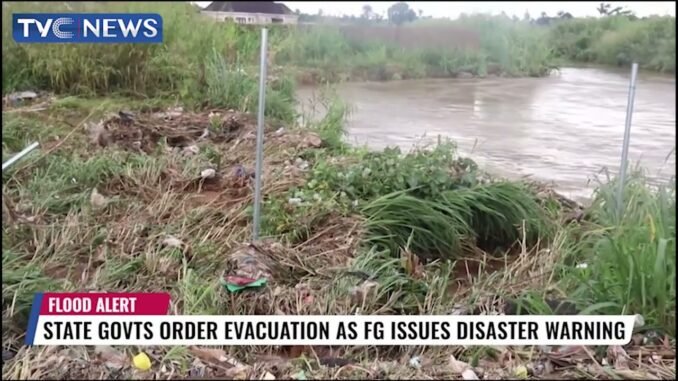

Summary: The Federal Government has warned that 33 states face high riverine flood risk between August 19–25, 2026. Find out if your state is affected and what steps to take to stay safe.
The Federal Government has sounded a serious alarm, and this is one warning Nigerians cannot afford to ignore. A seven-day flood risk forecast has been issued, placing 33 states on high alert* for dangerous riverine flooding between *August 19 and August 25, 2026.
The warning came from the Nigeria Hydrological Services Agency (NIHSA), which flagged rapidly rising water levels across major river basins and flood plains nationwide. If you live near a river, low-lying area, or any of the affected states, now is the time to pay close attention.
—
Why This Flood Season Is Different
Every year, Nigerians brace for the rainy season — the flooded roads, the waterlogged compounds, the occasional community that gets cut off. But this alert is on another level entirely. With 33 out of 36 states potentially in the line of fire, NIHSA’s warning signals that this could be one of the most widespread flood events the country has seen in recent memory.
Rising river levels across key flood plains have triggered the emergency forecast, with hydrological data pointing to a significant surge in water volumes over the coming days.
—
What You Need to Do Right Now
Whether you are in Lagos, Kogi, Anambra, Benue, or any other riverine community, do not wait until the water reaches your doorstep before you act. Here are practical steps to take immediately:
– Stay informed: Monitor updates from NIHSA, your State Emergency Management Agency (SEMA), and NEMA regularly.
– Avoid flood-prone areas: If you live near rivers, streams, or flood plains, consider temporarily relocating to higher ground.
– Secure your valuables: Move important documents, electronics, and essential items to elevated positions within your home.
– Do not attempt to cross flooded roads: As tempting as it may be to “manage” a flooded road, the risk is simply not worth it.
– Keep emergency contacts handy: Have the numbers for NEMA (0800-CALL-NEMA) and your local emergency services saved on your phone.
—
A Pattern We Must Take Seriously
Nigeria has witnessed devastating floods in recent years — from the catastrophic 2022 floods that displaced millions across states like Anambra, Kogi, and Bayelsa, to the annual flooding that repeatedly ravages communities in Benue and Delta. Each time, lives are lost and livelihoods are destroyed, often because warnings were not heeded early enough.
This time, the government has given us a seven-day window — that is seven days to prepare, to act, and to protect lives and property.
—
The Government’s Responsibility and Ours
While NIHSA and federal agencies have done their part by issuing this timely alert, the responsibility does not end there. State governors, local government chairmen, and community leaders must urgently mobilise resources, pre-position relief materials, and ensure that evacuation routes are clearly communicated to residents.
Ordinary Nigerians also have a role to play — look out for your neighbours, especially the elderly, children, and people living with disabilities who may need extra help during an emergency.
—
Stay Safe, Stay Alert
Floods do not give second chances. The window between a warning and a disaster is often frighteningly short. With the Federal Government raising the alarm this early, we have the advantage of time — but only if we use it wisely.
Keep your eyes on official channels, listen to your local radio stations, and take every precaution necessary. Your life — and the lives of those around you — depend on it.
Stay safe, Nigeria.
For more information, check buzzUp9ja
Be the first to comment