
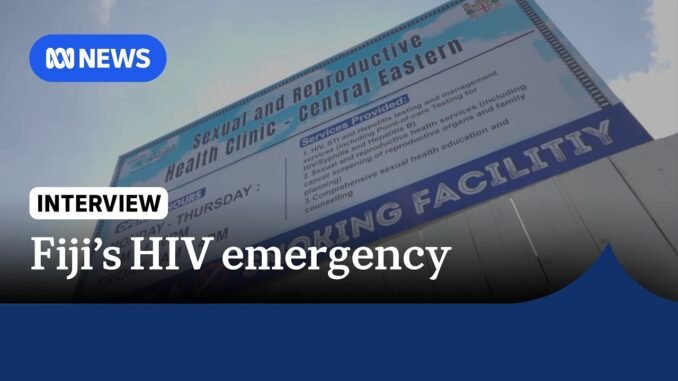

As Fiji battles a alarming surge in HIV infections linked to injectable drug use, health experts are sounding the alarm on a crisis that holds important lessons for the rest of the world.
The Pacific island nation of Fiji has officially declared HIV a national emergency, as health authorities scramble to contain what can only be described as a rapidly growing epidemic. The declaration comes on the heels of a dramatic and deeply troubling rise in new HIV infections — a situation that has left health officials deeply concerned about the country’s public health future.
What Is Happening in Fiji?
Fiji’s health authorities have raised a red flag over an extraordinary surge in HIV cases*, pointing to a strong link between the spike in infections and a rise in *injectable drug use across the country. This is a pattern that global health experts have seen play out in other parts of the world — when intravenous drug use increases in a community, the risk of HIV spreading rapidly through shared needles becomes a very real and dangerous threat.
The situation has deteriorated so significantly that the Fijian government felt compelled to declare a full-blown national health emergency — a serious step that signals just how urgent the crisis has become.
Why Should Nigerians Pay Attention?
You might be wondering — what does this have to do with us here in Nigeria? Plenty, actually.
Nigeria remains one of the countries with the highest HIV burden in the world*, with millions of Nigerians living with the virus. While our own epidemic is driven by different factors — primarily unprotected heterosexual intercourse — the Fiji situation is a powerful reminder of how *quickly HIV can spiral out of control when risk behaviours increase within a population and public health responses are slow or inadequate.
It is also a reminder that no country is immune to a fresh wave of infections, regardless of how much progress has been made in the past.
The Drug Use Connection
Health experts globally have long warned about the dangerous intersection of intravenous drug use and HIV transmission. When people share needles or syringes to inject drugs, the virus can spread with frightening speed through a community. Fiji’s current crisis appears to be a textbook — and tragic — example of this phenomenon playing out in real time.
While injectable drug use is not currently the primary driver of HIV in Nigeria, it is a growing concern in certain communities, and this is something public health advocates here at home have been quietly flagging for years.
What Happens When a Country Declares a Health Emergency?
A national health emergency declaration is not just a symbolic gesture — it typically unlocks emergency funding, resources, and coordinated government action* to tackle a crisis head-on. It also sends a message to international health organisations like the **World Health Organisation (WHO)** and *UNAIDS that urgent support is needed.
For Fiji, this declaration is a call to action — both for its own government and for the global health community to rally support.
The Bigger Picture
Fiji’s HIV emergency is a sobering reminder of several hard truths:
– HIV is not a disease of the past. Decades after it first emerged, it still has the power to overwhelm health systems when conditions are right.
– Prevention must always remain a priority. Whether through education, access to contraceptives, needle exchange programmes, or antiretroviral treatment, the tools to fight HIV exist — but they must be consistently deployed.
– Stigma kills. In many societies, including Nigeria, the stigma surrounding both HIV and drug use prevents people from seeking help until it is too late. Breaking down that stigma is as important as any medical intervention.
Final Thoughts
As Fiji battles this emergency, the rest of the world — including Nigeria — would do well to take note. Public health crises rarely give warning before they arrive. The best time to strengthen prevention efforts, improve access to testing, and reduce stigma is now, not when the numbers are already spiralling.
If you or someone you know needs information about HIV testing or treatment in Nigeria, reach out to the National Agency for the Control of AIDS (NACA) or visit your nearest government health facility. Knowledge is power — and in the fight against HIV, it can be lifesaving.
Stay informed. Stay protected. Share this post to spread awareness.
Connect for more on buzzUp9ja
Be the first to comment