
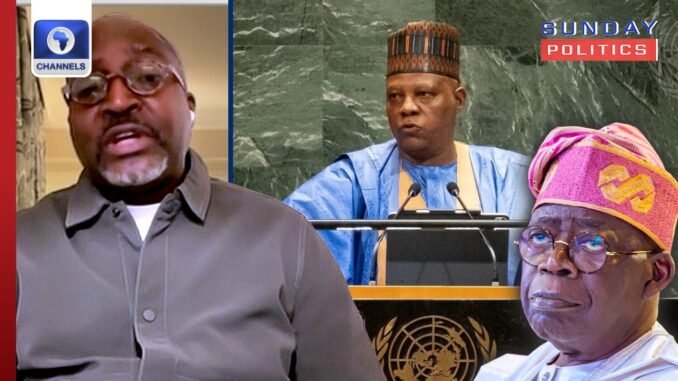

The Federal Government has fired back at opposition politicians, warning them to think twice before making statements that could tarnish Nigeria’s hard-earned image on the global stage.
As the dust continues to settle over President Bola Tinubu’s conspicuous absence from the United Nations General Assembly (UNGA), the Federal Government has come out swinging — not at foreign critics, but at opposition politicians right here at home.
In a stern caution that signals growing tension between the ruling All Progressives Congress (APC) administration and opposition figures, government spokespersons urged political opponents to put the nation’s interest first before reaching for their microphones.
“Don’t Demarket Nigeria” — FG’s Strong Warning
The government’s message was clear and direct: criticising the President’s absence at UNGA in ways that paint Nigeria in a bad light internationally crosses a line. While political rivalry is a normal part of any democracy, FG argued that some of the statements making the rounds risk doing real damage to Nigeria’s reputation — the kind of damage that could affect foreign investment, diplomatic relationships, and how the world perceives Africa’s largest economy.
Government officials stressed that there is a big difference between constructive criticism and what they described as “demarketing” — essentially selling Nigeria short to the rest of the world for political points.
Why This Matters for Naija
For many Nigerians, this back-and-forth is more than just political noise. Nigeria’s reputation on the world stage has very real consequences:
– Foreign Direct Investment (FDI): Investors watch closely how a country’s political class conducts itself. Instability signals — even those that come from within — can send potential investors running.
– Diplomatic Clout: Nigeria has always prided itself as the “Giant of Africa.” Any perception of internal chaos or leadership gaps weakens that standing.
– Diaspora Confidence: Millions of Nigerians abroad are affected by how their home country is perceived internationally.
Opposition’s Take
Critics, particularly from opposition camps, have argued that Tinubu’s absence from one of the world’s most significant diplomatic gatherings was itself a reputational issue — and that raising the concern publicly is not demarketing but accountability. For them, silence would be the greater disservice to Nigerians.
It is a classic case of “who blinks first” in Nigerian politics — and neither side appears ready to back down.
The Bigger Picture
This episode once again highlights the razor-thin line between patriotism and political criticism in Nigeria’s highly charged democratic space. While governments everywhere expect a degree of loyalty on matters of national image, opposition politicians equally have a constitutional duty to speak up when they believe the country’s leadership is falling short.
The question Nigerians are now asking is simple: At what point does holding power accountable become demarketing — and who gets to decide?
One thing is certain — as Nigeria continues to navigate its place on the African and global stage, how its political leaders — both in power and in opposition — conduct themselves will continue to matter. Naija no dey carry last, but it takes deliberate effort from everyone to keep it that way.
What do you think? Is the Federal Government right to caution the opposition, or is this an attempt to silence legitimate criticism? Drop your thoughts in the comments below.
Don’t miss out – visit buzzUp9ja
Be the first to comment