
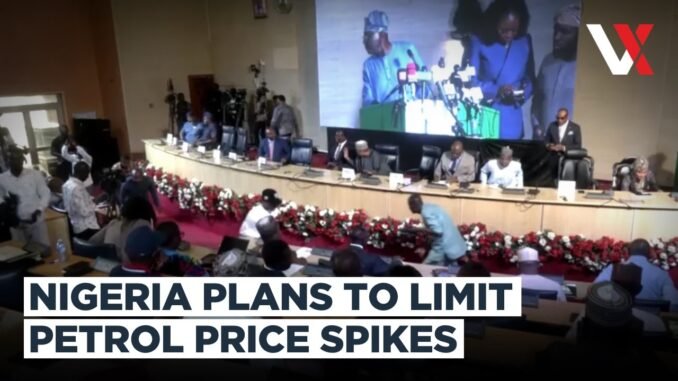

The Federal Government is in talks to place a ceiling on petrol landing costs. But will ordinary Nigerians finally get relief at the pump?
—
The Federal Government is reportedly in active negotiations to cap the ex-gantry — that is, the landing cost — of petrol at ₦1,350 per litre. This proposed price ceiling is part of a broader mechanism designed to bring some much-needed stability to fuel pump prices across the country.
For millions of Nigerians who have been groaning under the weight of skyrocketing fuel costs since the removal of the petrol subsidy, this development is one worth watching closely.
—
So, What Exactly Is an Ex-Gantry Price?
Before we go further, let’s break it down in simple terms. The ex-gantry price (sometimes called the landing cost) is essentially what oil marketers pay before petrol is loaded onto trucks and dispatched to filling stations. Think of it as the wholesale price — before the fuel even gets to that long queue at your neighbourhood filling station.
When this cost is high, pump prices go up. When it is controlled or capped, there is at least a chance — emphasis on chance — that what you pay at the pump becomes more predictable.
—
Why Is the Government Doing This?
Since the Federal Government removed the petrol subsidy in 2023, Nigerians have watched pump prices swing wildly — from around ₦500 per litre to well above ₦1,000 in many parts of the country. The naira’s continued weakness against the dollar has made matters worse, since Nigeria still imports a significant chunk of its fuel.
The proposed ₦1,350/litre ex-gantry cap appears to be the government’s attempt to put a lid on price volatility — essentially telling marketers: “You cannot charge more than this at the source.”
The idea is straightforward: if landing costs are predictable, pump prices should follow suit, giving both marketers and consumers a clearer picture of what to expect.
—
What This Could Mean for Everyday Nigerians
Let’s be honest — Nigerians have heard plenty of government promises before, and many have learnt to wait and see before celebrating. But if this mechanism works as intended, here’s what could change:
– More stable pump prices: No more waking up on a Monday to find that fuel jumped ₦200 overnight.
– Lower transportation costs: When fuel is stable, bus fares, keke fares, and the cost of moving goods around tend to follow.
– Reduced pressure on household budgets: From the woman frying akara in Mushin to the trader driving goods from Kano to Onitsha, cheaper and more predictable fuel touches nearly every part of daily life.
—
The Big Question: Will It Actually Work?
Here’s where the scepticism — well-earned, by the way — kicks in. A few things will determine whether this cap delivers real results:
1. Compliance by marketers: Will independent marketers and major distributors actually honour the cap, or will they find creative ways around it?
2. The naira’s performance: If the naira continues to slide against the dollar, maintaining any price cap becomes increasingly difficult without some form of subsidy creeping back in through the back door.
3. Dangote Refinery’s role: With the Dangote Refinery now refining locally and selling in naira, there is genuine hope that local supply could reduce our dependence on imports — and give the government more leverage in controlling landing costs.
—
The Bottom Line
The proposed ₦1,350/litre ceiling on petrol landing costs is a step in a direction Nigerians have been desperately waiting for — price predictability. Whether it becomes a lasting solution or another policy that fizzles out will depend on execution, economic conditions, and the political will to see it through.
For now, Nigerians watching the situation — fuel gallon in one hand, wallet in the other — can only hope that this time, relief is truly on the way.
—
Stay with buzzUp9ja for updates as this story develops. Share this article with someone who needs to know.
Be the first to comment