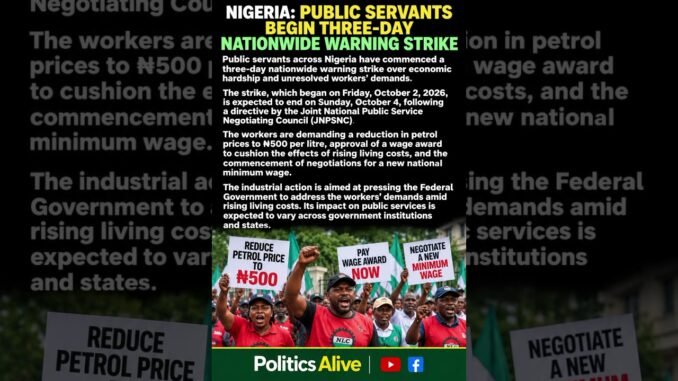

As the clock struck midnight on October 2, Nigerian public servants under the Joint National Public Service Negotiating Council (JNPSNC)* made good on their threat — downing tools and kicking off a three-day warning strike set to run from *October 2nd to 4th.
For many Nigerians already feeling the squeeze of the current economic climate, this development is anything but surprising. With the cost of living biting harder than ever — from the price of garri to the cost of transportation — workers in the public sector have apparently reached their breaking point.
Why Are Workers Striking?
The core issues driving this industrial action are ones that many everyday Nigerians can relate to on a deeply personal level: unbearable economic hardship and wages that simply cannot keep pace with the realities of today’s Nigeria.
In a country where fuel subsidy removal has sent prices of virtually everything through the roof, public servants — teachers, administrative staff, health workers, and more — are saying enough is enough. Their take-home pay, they argue, can no longer take them home.
A Warning Shot Across the Bow
Make no mistake — this is not a full-blown, indefinite strike. This is a warning strike, essentially a three-day message to the Federal Government and relevant authorities that workers are serious and ready to escalate if their demands are not met.
Think of it as a Lagos danfo driver slowing down before a pothole — it’s a signal, not a stop. But if the government ignores the signal, a longer, more disruptive strike could be just around the corner.
What This Means for Nigerians
During these three days, Nigerians who rely on public services should brace themselves for possible disruptions. Government offices, public institutions, and related services may experience:
– Reduced or zero staffing at various ministries and agencies
– Delays in processing of documents and applications
– Limited services in public hospitals and educational institutions
If you have any pending business at a government office, it may be wise to put it on hold until the situation is resolved.
The Bigger Picture
This strike is yet another reminder of the widening gap between the earnings of Nigerian workers and the skyrocketing cost of living. While the government has pointed to ongoing economic reforms as the path to long-term prosperity, many workers are struggling to survive in the short term.
Labour unions and worker groups across the country have consistently called on the Federal Government to review minimum wage structures and implement measures that provide real relief to ordinary Nigerians — not just on paper, but in their pockets.
As this situation develops, one thing is clear: the voices of Nigerian public servants can no longer be ignored. The ball is now in the government’s court. Will they engage meaningfully with workers’ demands, or will this three-day warning transform into something far bigger?
Stay with us for updates as this story develops.
For more information, check buzzUp9ja
Be the first to comment