
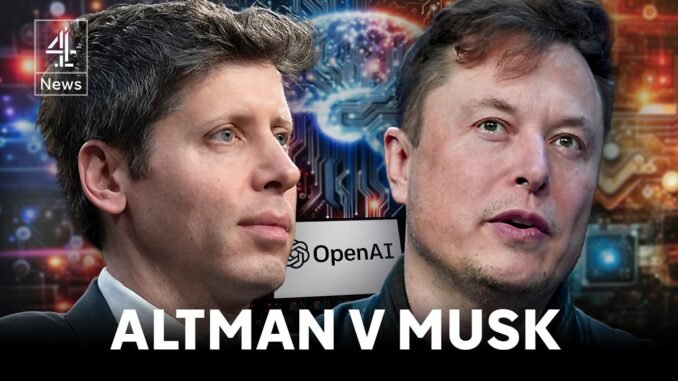

Summary: Elon Musk’s lawsuit against OpenAI and Sam Altman begins in US court. The billionaire claims the ChatGPT makers abandoned their non-profit mission for profit. Here’s what Nigerians need to know about this historic AI case.
The tech world is watching closely as one of the biggest legal showdowns in Silicon Valley history kicks off in a United States courtroom. Elon Musk, the billionaire behind Tesla and SpaceX, is taking OpenAI—the company that created ChatGPT—to court, and the outcome could determine how artificial intelligence develops for years to come.
For Nigerians who have embraced ChatGPT for everything from business proposals to school assignments, from content creation to coding help, this case hits close to home. The question at stake? Whether OpenAI betrayed its original mission to keep AI technology open and beneficial to all humanity.
The Heart of the Matter: From Partners to Courtroom Rivals
This isn’t just another corporate dispute between wealthy businessmen. This is a clash between two of the most influential figures in technology—Elon Musk and Sam Altman—who were once allies working toward a common goal.
Back in 2015, Musk was one of the founding members and major financial backers of OpenAI. At that time, the organization was established as a non-profit with a clear mission: to develop artificial intelligence that would benefit all of humanity, not just the highest bidder. The idea was simple but revolutionary—keep AI research open and transparent, ensuring that this powerful technology wouldn’t be controlled by a single corporation or government.
But according to Musk’s lawsuit, things took a different turn. He claims that OpenAI abandoned its non-profit roots and transformed into a profit-driven company, especially after partnering with Microsoft in a multi-billion dollar deal. For Musk, this represents a fundamental betrayal of the organization’s founding principles.
Why Should Nigerians Care About This Silicon Valley Drama?
You might wonder: “Why should we in Nigeria be concerned about a legal battle between two American billionaires?” The answer is straightforward—artificial intelligence is no longer a distant, foreign technology. It’s already changing how we work, learn, and do business right here in Nigeria.
From Lagos startups using AI to improve customer service, to Abuja students leveraging ChatGPT for research, to Port Harcourt entrepreneurs automating their businesses—AI tools have become part of our daily digital toolkit. Many Nigerian content creators, including bloggers, social media managers, and digital marketers, rely on these technologies to compete in the global marketplace.
The outcome of this case could determine whether AI remains accessible to everyday users or becomes locked behind expensive paywalls controlled by big tech corporations. For a developing nation like Nigeria, where access to affordable technology can make or break opportunities, this matters tremendously.
What Exactly Is Musk Accusing OpenAI Of?
According to court documents, Musk’s allegations center on several key points:
Betrayal of Non-Profit Mission: Musk claims he contributed substantial funding—reportedly over $44 million—to OpenAI based on the understanding that it would remain a non-profit organization dedicated to open-source AI development. He argues that the company’s pivot toward a for-profit model, particularly through its partnership with Microsoft, violates the original agreement.
Closed Rather Than Open AI: The lawsuit highlights that despite its name, OpenAI has become increasingly secretive about its technology. GPT-4, the latest version of the AI that powers ChatGPT, is not open-source. This means other researchers, developers, and companies cannot examine how it works or build upon it freely—a stark contrast to the organization’s founding principles.
Prioritizing Profit Over Safety: Musk contends that in the rush to commercialize their technology and beat competitors, OpenAI may be cutting corners on AI safety research and ethical considerations that were supposed to be paramount.
Breach of Fiduciary Duty: The legal claim suggests that OpenAI’s leadership, including Sam Altman, failed in their responsibility to honor the commitments made to early supporters and the public about how the organization would operate.
OpenAI and Sam Altman’s Defense
Sam Altman and OpenAI haven’t taken these accusations lying down. They argue that Musk’s lawsuit is without merit and motivated by competitive jealousy rather than genuine concern for AI’s future.
OpenAI’s position is that the world of AI development changed dramatically since 2015. The computing power and resources needed to develop cutting-edge AI systems have grown exponentially. According to them, remaining purely non-profit would have made it impossible to compete with well-funded corporations like Google and Facebook (Meta) in the AI race.
The company maintains that their partnership with Microsoft, while commercial, still allows them to pursue their mission of ensuring AI benefits humanity. They point to various safety measures, research initiatives, and the fact that millions of people worldwide—including in Nigeria—can access ChatGPT for free or at affordable prices.
Additionally, OpenAI has suggested that Musk’s real motivation might be his own AI ambitions. After all, Musk has since launched his own AI company called xAI and released a competing chatbot called Grok. Some see this lawsuit as an attempt to slow down a competitor while Musk’s own AI ventures catch up.
The Nigerian Angle: What’s at Stake for Us?
For the average Nigerian tech user, entrepreneur, or student, this case represents more than just billionaire drama. It touches on fundamental questions about technology access and digital inequality.
Access to AI Tools: If OpenAI wins and continues on its current path, we might see more AI tools becoming expensive, subscription-based services. While some Nigerians can afford ChatGPT Plus at $20 monthly, many cannot. A shift toward more commercialization could price out a significant portion of African users.
Local AI Development: Nigeria has a growing tech ecosystem with talented developers and entrepreneurs. An “open” AI landscape would allow Nigerian developers to build innovative solutions on top of these technologies, creating locally relevant applications. A closed, proprietary system makes this much harder.
Educational Opportunities: Nigerian students and researchers benefit immensely from access to AI tools for learning and research. Restrictions on these technologies could widen the educational gap between Nigeria and more developed nations.
Business Competitiveness: From Nollywood producers using AI for video editing to fashion designers using it for pattern creation, Nigerian businesses are finding creative applications for AI. Affordable access is crucial for maintaining competitiveness in the global market.
The Broader Context: The Global AI Race
This legal battle is unfolding against the backdrop of an intense global competition for AI supremacy. Countries and companies worldwide are racing to develop the most advanced AI systems, seeing them as crucial to economic and strategic advantage.
The United States, China, and the European Union are all investing billions in AI development. For African nations like Nigeria, which are not leading this race, the concern is being left behind or becoming mere consumers of technology developed elsewhere, without the ability to shape it or ensure it serves our interests.
Musk’s argument—that AI development should be more open and transparent—resonates with those who worry about a handful of Western corporations controlling this transformative technology. On the other hand, OpenAI’s position—that massive resources are needed to develop safe, effective AI—reflects the practical realities of cutting-edge technology development.
What Happens Next?
As jury selection begins, legal experts expect this trial to last several weeks, possibly months. Both sides have assembled formidable legal teams, and the case involves complex questions about contract law, fiduciary duty, and the interpretation of non-profit governance.
The jury will need to determine whether OpenAI’s transformation from a non-profit to a “capped-profit” entity violated any agreements with Musk, and if so, what remedies are appropriate. Possible outcomes range from financial compensation to more dramatic possibilities like forcing OpenAI to restructure or make some of its technology open-source.
Beyond the immediate legal questions, this case could set important precedents for how AI companies are governed and held accountable to their stated missions and early supporters.
The Nigerian Tech Community Responds
Nigerian tech enthusiasts and professionals have been following this case with keen interest on social media and tech forums. Many express hope that regardless of the outcome, the trial will spark broader conversations about AI governance, accessibility, and ethics.
Some Nigerian AI developers have pointed out that while we consume these technologies, Africa has little voice in the decisions that shape them. This case, they argue, highlights the need for Nigeria and other African nations to develop their own AI capabilities and policies rather than being entirely dependent on American or Chinese technology.
Lessons for Nigeria’s Tech Ecosystem
There are several takeaways from this high-profile dispute that are relevant to Nigeria’s growing technology sector:
Clear Governance Structures Matter: Whether you’re starting a tech company in Yaba or launching an NGO focused on technology education, having clear, written agreements about mission, ownership, and decision-making is crucial. The ambiguity around OpenAI’s transition from non-profit to for-profit is at the heart of this dispute.
Mission Drift is Real: Organizations can stray from their founding principles, especially when significant money is involved. Nigerian startups and NGOs should build in safeguards to ensure they stay true to their core missions even as they grow.
Open Source vs. Proprietary: The debate between open and closed technology isn’t abstract—it has real implications for who can access and benefit from innovations. Nigerian developers should consider how their licensing and sharing decisions affect their communities.
Documentation is Everything: This lawsuit hinges on what was agreed upon in the early days of OpenAI. Nigerian entrepreneurs should take note: document your agreements, partnerships, and commitments clearly from the start.
Looking Ahead: AI’s Future in Nigeria
Regardless of how this case concludes, AI is here to stay, and its influence on Nigerian society will only grow. The question is whether we’ll be active participants in shaping this technology or passive consumers of whatever Silicon Valley produces.
There are encouraging signs. Nigerian universities are beginning to offer AI courses, startups are experimenting with AI applications for local challenges, and the government is starting to consider AI policy frameworks. But much more needs to be done.
This Musk-OpenAI battle should serve as a wake-up call. Nigeria needs to invest in AI education, support local AI research and development, and participate in global conversations about AI governance. We cannot afford to be mere spectators in a technological revolution that will reshape our economy, education, and society.
The Bottom Line
As jury selection begins in this landmark case, the stakes extend far beyond the courtroom and far beyond America’s borders. For Nigerians who have embraced ChatGPT and other AI tools, the outcome will influence what technologies we have access to and at what cost.
Whether you’re team Musk (arguing for open, accessible AI) or team Altman (contending that powerful AI requires massive resources and some commercial structure), one thing is clear: artificial intelligence is too important to be left entirely in the hands of a few billionaires and corporations.
The conversations happening in that US courtroom should be happening in Lagos, Abuja, Kano, and every Nigerian city. We need to ask ourselves: What kind of AI future do we want? How do we ensure Nigeria isn’t left behind? And how can we make sure these powerful technologies serve our interests and values?
This trial may be taking place in America, but its implications are global. And for Nigerians navigating an increasingly AI-powered world, paying attention to this battle isn’t just about tech industry gossip—it’s about understanding the forces that will shape our digital future.
As this case unfolds in the coming weeks, one thing is certain: the age of artificial intelligence is here, and the decisions made today—in courtrooms, boardrooms, and yes, even in Nigerian tech hubs—will echo for generations to come.
What do you think? Should AI technology be open and accessible to all, or does developing cutting-edge AI require the resources only major corporations can provide? Share your thoughts in the comments below.
For more details, check buzzUp9ja
Be the first to comment