
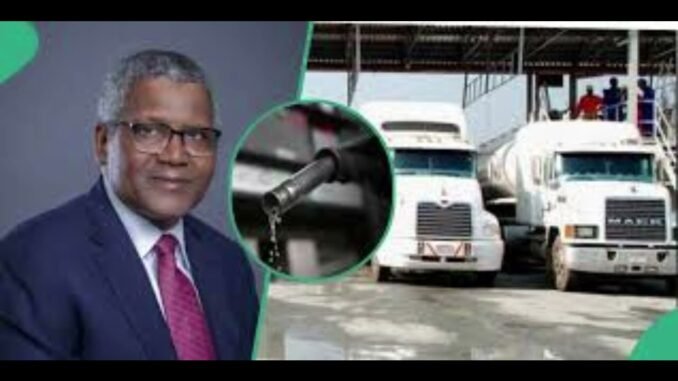

Summary: Dangote Refinery has increased petrol prices by N75, bringing ex-depot rates to N1,275 per litre. Learn what this means for Nigerian consumers and the ongoing fuel supply challenges.
Another day, another price hike. Just when Nigerians thought they’d caught a break, the Dangote Refinery has announced yet another increase in the pump price of Premium Motor Spirit (PMS), commonly known as petrol. The new ex-depot price now stands at a whopping N1,275 per litre—a N75 jump that has left many motorists and business owners wondering when this madness will end.
What’s Happening at Dangote Refinery?
The 650,000-barrel-per-day facility, which was heralded as Nigeria’s salvation from fuel importation wahala, has raised its ex-depot pricing significantly. For those who don’t know, the ex-depot price is what marketers pay at the refinery before adding their own margins and transportation costs. This means that by the time petrol reaches your neighbourhood filling station, you could be paying well over N1,300 or even N1,400 per litre, depending on where you live.
But that’s not all. Sources indicate that Dangote Refinery has also suspended product sales following disruptions in its Proforma Invoice system. This technical glitch has reportedly affected the smooth distribution of petroleum products, creating additional uncertainty in an already fragile fuel supply chain.
Why Another Price Increase?
While the refinery hasn’t issued an official statement explaining the latest hike, industry watchers point to several factors:
– Foreign exchange pressures: The naira continues to struggle against the dollar, making crude oil purchases and refining operations more expensive
– Global oil price fluctuations: International crude prices remain volatile, affecting local pricing
– Operational costs: Running a mega-refinery in Nigeria’s challenging business environment doesn’t come cheap
What This Means for Ordinary Nigerians
Let’s be honest—this is terrible news for the average Nigerian. With petrol prices climbing higher by the week, the ripple effects are already being felt across the economy:
– Transportation costs have skyrocketed, with okada riders, keke napep operators, and taxi drivers all increasing their fares
– Food prices continue to surge as the cost of transporting goods from farms to markets climbs
– Small businesses that depend on generators due to epileptic power supply are being squeezed from all sides
– Cost of living generally has become unbearable for many Nigerian families
One Lagos-based trader, Mama Ngozi, expressed her frustration: “We thought Dangote refinery would be our messiah. Now we’re paying more than when we were importing fuel. How are we supposed to survive?”
The Bigger Picture
The Dangote Refinery began petrol production late last year amid great fanfare and expectations that it would end Nigeria’s decades-long dependence on imported fuel. While the facility has indeed started producing, the promise of cheaper petrol remains elusive.
Critics argue that as long as petroleum products are priced based on international benchmarks and the naira remains weak, local refining alone cannot solve Nigeria’s fuel price problems. Others point to policy inconsistencies and the removal of fuel subsidies as major factors in the current crisis.
What Should Nigerians Expect?
Unfortunately, relief doesn’t appear to be coming anytime soon. With the Federal Government maintaining its deregulation policy and the naira showing no signs of significant recovery, Nigerians should brace for continued volatility in fuel prices.
The suspension of sales at Dangote Refinery, even if temporary, could also trigger supply shortages and long queues at filling stations—something Nigerians know all too well.
Our Take
Nigeria’s fuel pricing situation has become a national emergency that requires urgent intervention. While the Dangote Refinery represents a significant achievement in our quest for energy self-sufficiency, pricing and distribution challenges must be addressed transparently.
The government needs to come clean with Nigerians about its energy policy direction, while also implementing measures to cushion the devastating impact of these price increases on citizens who are already struggling with multiple economic pressures.
For now, Nigerians will have to dig deeper into their pockets just to keep their vehicles running and businesses operating. E don set for all of us.
What are your thoughts on the latest Dangote petrol price increase? How is it affecting your daily life and business? Share your experiences in the comments below.
Check buzzUp9ja for more info
Be the first to comment