
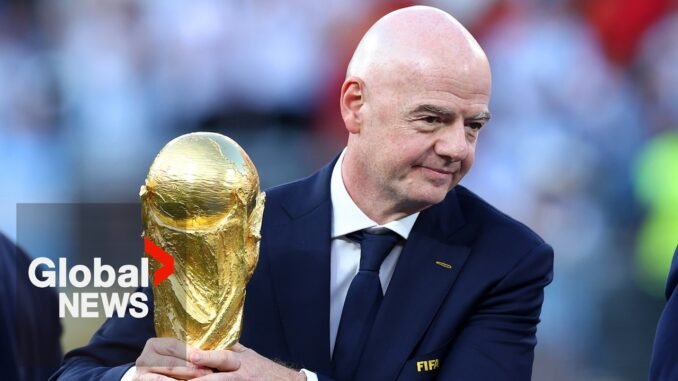

In a move that has sent ripples across the global football community, the Belgian Football Association has officially pulled its support for Gianni Infantino’s bid to continue as FIFA President. The announcement, made on Monday, shines a fresh spotlight on long-standing questions about how world football is being governed — questions that many African football stakeholders, including Nigerians, have been asking for years.
So, What Exactly Happened?
The Belgian FA made it clear that their decision was not personal — it was principled. Their concern? Transparency and governance within FIFA, the body that controls the beautiful game we all love from Lagos to London, from Kano to Kinshasa.
For an organisation that handles billions of dollars in football revenues and makes decisions that directly affect leagues, national teams, and tournaments across the world, these are not small concerns. As any Nigerian football fan who has watched the Super Eagles navigate the complexities of CAF and FIFA regulations will tell you — governance matters, and when it is poor, the effects trickle all the way down to grassroots football.
Why Should Nigerians Care?
You might be wondering: “Wetin concern Belgian FA concern me as a Nigerian?” — and that is a fair question. But hear this:
FIFA’s decisions affect everything — from how much money the NFF (Nigeria Football Federation) receives for development programmes, to how World Cup slots are allocated to African nations, to the rules governing player transfers that shape careers of Nigerian talents like those lighting up European leagues today.
When a football association — even one as far away as Belgium — raises alarm bells about FIFA’s transparency, it is a conversation that touches all of us who are passionate about Nigerian football and its place on the world stage.
The Bigger Picture: Governance in Football
Infantino has been FIFA President since 2016, succeeding the controversial Sepp Blatter. His tenure has not been without its own controversies — from questions about his relationship with Saudi Arabia, to debates over the expansion of the World Cup to 48 teams, a decision with significant implications for African football.
The Belgian FA’s withdrawal of support is a reminder that accountability does not take a break, no matter how powerful an institution becomes.
What Happens Next?
FIFA’s presidential election process will continue, and it remains to be seen whether other associations — particularly from Africa — will follow Belgium’s lead or maintain their backing for Infantino, who has historically cultivated strong relationships with the African football bloc.
The CAF (Confederation of African Football) has traditionally been an important pillar of support for Infantino. How African nations, including Nigeria, position themselves in this unfolding drama could play a significant role in shaping the outcome.
Final Whistle
Football is more than just a game — it is politics, money, culture, and pride all rolled into one. For a nation like Nigeria, where football is practically a religion, ensuring that the game is governed with integrity at the highest level is not just desirable — it is essential.
As this story develops, one thing is clear: the conversation about who leads FIFA and how they lead it is far from over.
Stay with us for more updates as this story develops.
Connect for more on buzzUp9ja
Be the first to comment