
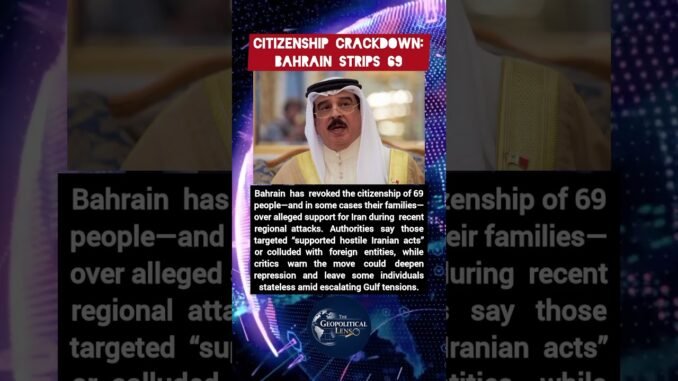

Summary: Bahrain revokes citizenship of 69 people accused of supporting Iran as Gulf tensions escalate. Understand the implications of this controversial move in the Middle East power struggle.
In a dramatic escalation of regional tensions, Bahrain has stripped 69 of its citizens of their nationality, accusing them of maintaining ties with Iran. This bold move highlights the deepening divisions in the Gulf region and raises serious questions about citizenship rights and political allegiances.
What Happened?
The Bahraini government issued an official statement announcing the revocation of citizenship for the 69 individuals, claiming they had “links to Iran” that compromised national security. While specific details about these alleged connections remain scarce, the timing of this announcement is particularly significant, coming as tensions between Gulf Arab states and Iran continue to simmer.
For Nigerians watching global affairs, this development may seem distant, but it reflects a pattern we’ve witnessed in our own country: governments using citizenship and national identity as tools in broader political conflicts. Just as Nigeria grapples with questions of national unity and belonging, Middle Eastern nations are wrestling with similar issues, though in a very different context.
The Bigger Picture: Gulf Rivalry
Bahrain, a small island nation in the Persian Gulf, has long positioned itself as a close ally of Saudi Arabia and other Sunni-majority Arab states. Meanwhile, Iran, a predominantly Shia nation, is viewed by these countries as a regional rival seeking to expand its influence.
The relationship between Bahrain and Iran has been particularly fraught. Bahrain’s ruling family is Sunni, while the majority of its population is Shia—a demographic reality that has fueled political tensions for decades. The Bahraini government frequently accuses Iran of fomenting unrest among its Shia population, charges that Tehran routinely denies.
Citizenship as a Political Weapon
This isn’t the first time Bahrain has used citizenship revocation as a political tool. Over the past decade, the kingdom has stripped hundreds of people of their nationality, often targeting activists, opposition figures, and those accused of disloyalty to the ruling Al Khalifa family.
Human rights organizations have consistently criticized these practices, arguing that revoking citizenship renders individuals stateless and violates international law. Once stripped of nationality, affected individuals often lose access to employment, education, healthcare, and the ability to travel freely—effectively making them outcasts in their own homeland.
Why Should Nigerians Care?
While the Gulf may seem worlds away from Nigeria, there are important lessons here for our own democracy:
1. The Danger of Weaponizing Citizenship: When governments use citizenship as a punishment or political tool, it sets a dangerous precedent. In Nigeria, where ethnic and religious tensions sometimes run high, we must guard against any attempts to question the citizenship or belonging of any group.
2. Regional Power Dynamics: The Saudi-Iran rivalry affects global oil prices, which directly impacts Nigeria’s economy. Understanding these tensions helps us make sense of fluctuations in our own petroleum sector.
3. Human Rights Concerns: As Nigeria continues to strengthen its democratic institutions, we must learn from situations like Bahrain’s, where political disagreements can result in severe punishments that violate basic human rights.
International Response
The international community has expressed concern over Bahrain’s latest move, with human rights groups calling for the restoration of citizenship to those affected. However, given Bahrain’s close ties with Western powers—particularly the United States, which maintains a major naval base there—substantive international pressure has been limited.
What Happens Next?
For the 69 individuals who have lost their citizenship, the future is uncertain. Some may seek asylum in other countries, while others could remain in Bahrain as stateless persons, facing severe restrictions on their daily lives.
The broader implications for Gulf stability are also unclear. If tensions between Iran and its Arab neighbors continue to escalate, we could see more such punitive measures, potentially affecting thousands more people across the region.
Final Thoughts
Bahrain’s decision to revoke the citizenship of 69 people is more than just a local administrative action—it’s a reflection of deep-seated regional conflicts that have persisted for decades. It reminds us that citizenship, nationality, and belonging are precious rights that should be protected, not wielded as weapons in political battles.
As Nigerians, we can appreciate the value of our own hard-won national unity while remaining vigilant against any forces that might seek to divide us along ethnic, religious, or political lines. The situation in Bahrain serves as a cautionary tale about what can happen when governments prioritize political considerations over human rights and due process.
The Gulf crisis continues to unfold, and its ripple effects will be felt far beyond the Middle East—in oil markets, global politics, and in the lives of ordinary people caught in the crossfire of geopolitical rivalry.
For more details, check buzzUp9ja
Be the first to comment