
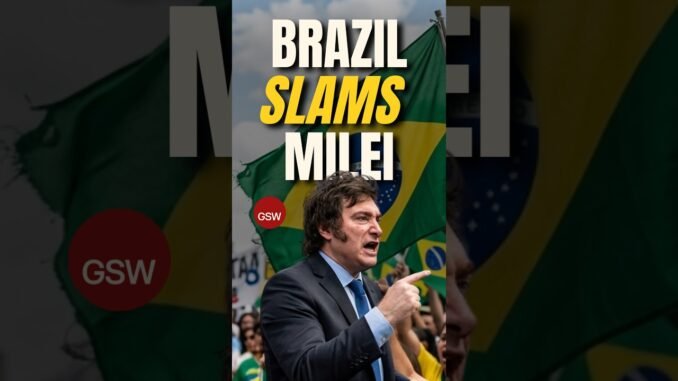

Summary: Argentine President Javier Milei has signed an emergency decree allowing the deportation of foreigners who make discriminatory or violent statements against Argentines — and the move is already sparking global conversation.
—
Argentina’s controversial president, Javier Milei, has taken a bold and sweeping step that would make even the most hardline Nigerian politician raise an eyebrow. On Thursday, Milei signed an emergency decree giving his government the power to deny entry to — or outright deport — any foreigner found to be inciting discrimination or violence against Argentine citizens.
In simple terms: if you come to Argentina and decide to “tear mouth” against Argentines, you may find yourself on the next flight back home.
What Exactly Did Milei Sign?
The emergency decree essentially arms the Argentine government with the legal muscle to clamp down on hate speech and discriminatory behaviour directed at its citizens by foreign nationals. Under this new order, any foreigner who stirs up ethnic, national, or cultural hatred against Argentines could face serious immigration consequences — including being shown the door permanently.
While the decree covers a broad range of situations, it has come on the heels of rising tensions surrounding football — specifically Argentina’s dominance on the world stage since their 2022 FIFA World Cup triumph in Qatar. Since that victory, Argentine players and fans have faced a wave of online abuse and real-life provocations from rivals who simply cannot accept that La Albiceleste are the reigning world champions.
Football Fever and National Pride
If you know anything about Nigerians and football, you already understand the passion involved. We have cried, celebrated, and argued over the Super Eagles for decades. So imagine how Argentines feel — a nation where football is practically a religion, and Lionel Messi is closer to a deity than a mere footballer.
Since winning the World Cup, Argentina has faced increasing hostility from some quarters — particularly online — with foreigners mocking, insulting, and in some cases making what authorities consider threatening statements about Argentine nationals. Milei, never one to shy away from dramatic action, clearly decided that enough is enough.
A Move That Has the World Talking
The decree has predictably divided opinion both within Argentina and internationally. Supporters argue it is a necessary measure to protect national dignity and ensure that Argentine citizens — whether at home or abroad — are not subjected to hatred simply because of their nationality.
Critics, however, are raising concerns about freedom of speech, warning that such a broad decree could easily be misused to silence legitimate criticism or political dissent from foreign voices.
It is worth noting that this is not entirely new territory globally. Many countries — including several in the European Union — have laws that can result in deportation for foreigners who engage in hate speech or incitement. What makes this case unique is the speed* and *directness with which Milei acted, bypassing the legislature entirely through an emergency decree.
What This Means in the Bigger Picture
For Nigerians watching this unfold, there are some interesting takeaways:
– National identity matters. Whether you are in Buenos Aires or Abuja, people take pride in where they come from — and governments are increasingly looking at ways to protect that pride legally.
– Social media has consequences. The wave of anti-Argentine sentiment that reportedly triggered this decree largely played out online. It is a sharp reminder that what you post on X (formerly Twitter) or TikTok can have real-world consequences.
– Football and politics are never truly separate. From the Super Eagles to La Albiceleste, the beautiful game has always had a way of spilling into the political arena.
Whether you think Milei went too far or not far enough, one thing is clear — Argentina is not taking disrespect lying down. And honestly? We understand the energy.
—
What do you think about this decree? Should other countries adopt similar laws to protect their citizens from hate speech abroad? Drop your thoughts in the comments below!
Stay tuned for more news on buzzUp9ja
Be the first to comment