
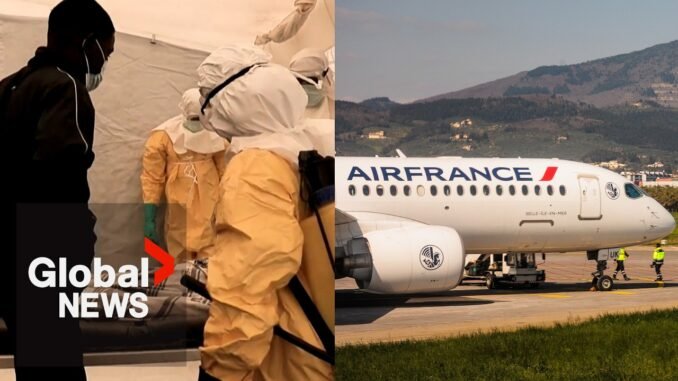

In a dramatic turn of events that has caught the attention of travelers across Africa, including Nigeria, an Air France flight was recently prevented from entering United States airspace and diverted to Canada after authorities raised concerns about a passenger’s potential exposure to Ebola in Africa.
What Happened?
Air France Flight 378, which was originally scheduled to land in the United States, found itself at the center of an international health alert when officials became aware that one passenger aboard may have been exposed to the Ebola virus during their time in Africa.
Rather than allowing the aircraft to continue to its intended American destination, US authorities made the swift decision to redirect the plane to Canada, where health officials could properly assess the situation and screen the passenger in question.
The Ebola Connection
This incident brings back memories of previous Ebola outbreaks that affected several African nations, including our West African neighbors. The virus, which has caused significant health crises in countries like Guinea, Liberia, and Sierra Leone in the past, remains a serious concern for international health authorities.
For many Nigerians, this news may trigger recollections of 2014, when our own country successfully contained an Ebola outbreak through quick action and effective contact tracing—a response that was praised globally.
What This Means for African Travelers
This diversion highlights an uncomfortable reality that many Nigerian and African travelers face: increased scrutiny at international borders, particularly when traveling to Western countries.
While health precautions are necessary and understandable, incidents like these can sometimes lead to:
– Extended delays at immigration checkpoints
– Additional health screenings for travelers from African nations
– Anxiety and stigmatization of African passengers
– Disruptions to travel plans and connections
The Broader Context
It’s important to note that such precautionary measures, while sometimes inconvenient, are part of global health protocols designed to prevent the spread of infectious diseases. The international community learned valuable lessons from past Ebola outbreaks about the importance of early detection and containment.
However, many African travelers and health advocates argue that these measures should be applied fairly and based on current, accurate information rather than broad generalizations about an entire continent.
Lessons for Nigerian Travelers
If you’re planning international travel, particularly to North America or Europe, here are some important points to keep in mind:
Stay Informed: Keep updated on current health advisories in your destination country and any regions you’ve recently visited.
Carry Documentation: Have proof of vaccinations and health clearances readily available when traveling internationally.
Allow Extra Time: Factor in potential additional screening time at airports, especially if you’re making connecting flights.
Know Your Rights: Understand that while countries have the right to protect their borders, you also have rights as a traveler. Discrimination based solely on nationality or origin is not acceptable.
Travel Insurance: Consider comprehensive travel insurance that covers unexpected delays and diversions.
Nigeria’s Strong Track Record
It’s worth remembering that Nigeria has demonstrated strong capacity in managing health emergencies. Our successful containment of Ebola in 2014, under challenging circumstances, showed the world that African nations can effectively respond to health crises with the right resources and coordination.
The Nigeria Centre for Disease Control (NCDC) continues to maintain robust surveillance systems, and Nigerian health authorities work closely with international partners to ensure both the safety of our citizens and the accuracy of health information shared globally.
Final Thoughts
While this Air France incident may seem alarming, it’s essential to view it within the proper context of global health security measures. As Nigerians and Africans, we should advocate for fair, science-based health protocols that protect everyone without unfairly stigmatizing travelers from our continent.
At the same time, we must continue supporting robust health systems at home that can quickly detect and respond to potential outbreaks—not just to protect ourselves, but to maintain confidence in African travel and trade worldwide.
For travelers, the message is clear: stay informed, be prepared, and don’t let fear—yours or others’—keep you from exploring the world. Our continent has much to offer, and Nigerian travelers continue to make their mark globally, health scares notwithstanding.
Have you experienced additional screening while traveling internationally? Share your experiences and tips in the comments below.
For more information, check buzzUp9ja
Be the first to comment