
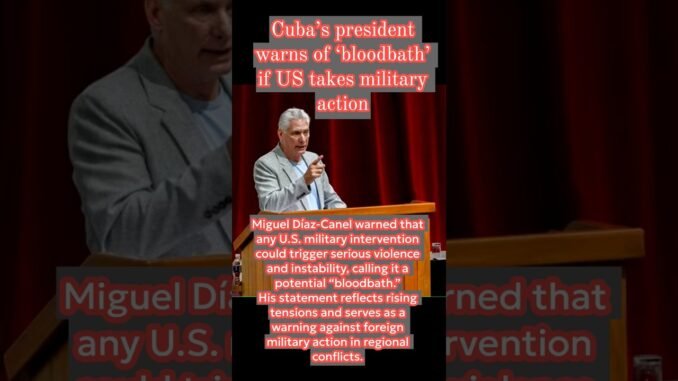

Summary: Cuban President Miguel Díaz-Canel warns of catastrophic consequences if the US takes military action against Cuba. Analysis of escalating tensions and implications for global peace.
As tensions escalate between Havana and Washington, Cuban leader Miguel Díaz-Canel delivers a powerful message that has caught global attention
Cuban President Miguel Díaz-Canel has sent a clear and uncompromising message to the United States: any military intervention against Cuba will result in catastrophic consequences that the world cannot afford to ignore.
The Cuban leader’s warning comes at a time when relations between the Caribbean island nation and its powerful northern neighbor have deteriorated significantly, raising concerns across the international community about potential conflict in the region.
A Nation Ready to Defend Its Sovereignty
President Díaz-Canel’s statement reflects Cuba’s long-standing position of fierce independence and resistance to foreign interference – a stance that Nigerians can relate to, given our own history of fighting for sovereignty and self-determination.
“A US military assault on Cuba will cause a bloodbath with incalculable consequences,” Díaz-Canel declared, making it abundantly clear that his nation would not surrender without resistance if attacked.
This bold statement sends a strong signal that despite being a relatively small nation facing the world’s most powerful military force, Cuba remains unwilling to back down in defense of its sovereignty.
Understanding the Cuba-US Tension
The relationship between Cuba and the United States has been complicated for decades, dating back to the Cold War era. For Nigerians watching from afar, this situation mirrors many conflicts we’ve witnessed globally where smaller nations stand firm against perceived aggression from larger powers.
The current escalation has brought back memories of historical standoffs and raises questions about international law, the right to self-determination, and the role of military force in resolving disputes between nations.
What This Means for Regional Stability
Any military conflict in the Caribbean would have far-reaching implications beyond Cuba’s borders. Just as instability in one African nation often affects neighboring countries, a crisis in Cuba could destabilize the entire Caribbean and Latin American region.
The international community, including African nations like Nigeria, watches these developments with concern. We understand that peace and dialogue should always be the first option before any consideration of military action.
Nigeria’s Perspective on Sovereignty
As Nigerians, we understand the importance of national sovereignty. Our own journey to independence and our continued efforts to maintain our autonomy in international affairs give us a unique perspective on Cuba’s situation.
We know what it means to stand firm in the face of external pressure, and we recognize the courage it takes for a leader to defend their nation’s interests, even when facing a much more powerful adversary.
The Path Forward
While President Díaz-Canel’s warning is stern, it also serves as a call for diplomatic solutions. The “incalculable consequences” he mentions would affect not just Cuba and the United States, but the entire global community.
History has shown us time and again that military action should be the last resort, not the first response to international disagreements. Dialogue, negotiation, and respect for international law offer better paths to resolving conflicts.
Lessons for the Global Community
This situation reminds us of several important principles:
Respect for Sovereignty: Every nation, regardless of size, has the right to self-determination and should be free from military threats.
The Cost of Conflict: War brings suffering, displacement, and economic devastation – consequences that last for generations.
The Power of Diplomacy: Even the most difficult disputes can be resolved through sustained dialogue and good-faith negotiations.
International Solidarity: Smaller nations must support each other’s right to exist peacefully and independently.
What Happens Next?
As the situation continues to unfold, the world watches carefully. Will cooler heads prevail? Will diplomatic channels open up to ease tensions? Or will this war of words escalate further?
For now, President Díaz-Canel’s warning stands as a reminder that Cuba is prepared to defend itself, come what may. Whether this leads to de-escalation or further tension remains to be seen.
The Nigerian Take
From Lagos to Abuja, from Port Harcourt to Kano, Nigerians understand the value of peace and the importance of standing firm when your nation’s sovereignty is threatened. We’ve faced our own challenges, both internal and external, and we know that true strength lies not just in military might but in the courage of conviction and the willingness to defend what is right.
As this situation develops, let us hope that wisdom prevails over aggression, and that dialogue triumphs over the drums of war. The world has seen enough bloodshed – what we need now is more understanding, more respect, and more commitment to peaceful coexistence.
What are your thoughts on this developing situation? Should international organizations step in to mediate? Share your views in the comments below.
For more updates, visit buzzUp9ja
Be the first to comment