
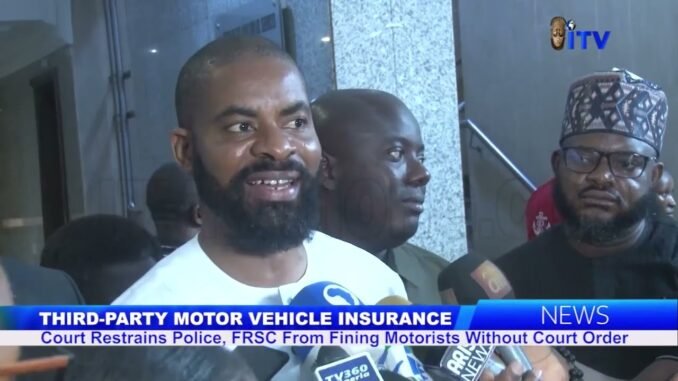

Summary: Federal High Court in Abuja has barred the Nigeria Police and FRSC from imposing fines on motorists over third-party motor insurance. Find out what this means for Nigerian drivers.
A Federal High Court in Abuja has delivered a landmark ruling that will bring relief to millions of Nigerian motorists across the country. Justice Hauwa Yilwa has issued a restraining order stopping the Nigeria Police Force (NPF) and the Federal Road Safety Corps (FRSC) from imposing fines and penalties on drivers over third-party motor insurance issues.
What This Ruling Means for Nigerian Drivers
This court decision addresses a long-standing source of friction between law enforcement agencies and motorists on Nigerian roads. For years, drivers have complained about being stopped and fined by police officers and FRSC officials over third-party insurance documentation, often leading to roadside disputes and allegations of extortion.
The ruling by Justice Yilwa now provides legal protection for motorists, clarifying the boundaries of enforcement powers held by these security agencies when it comes to motor insurance matters.
Understanding Third-Party Motor Insurance in Nigeria
Third-party motor insurance is a mandatory requirement for all vehicle owners in Nigeria under the Insurance Act. This basic coverage protects other road users and their property in case of an accident caused by the insured vehicle. However, the enforcement of this requirement has been a grey area, with multiple agencies claiming authority to sanction non-compliance.
The Legal Battle
The case that led to this restraining order highlights the confusion surrounding who has the legal authority to enforce motor insurance compliance and impose penalties. Many Nigerian motorists have found themselves caught in a web of overlapping enforcement, with different agencies demanding payments and imposing sanctions.
What Happens Next?
With this court order in place, the NPF and FRSC are now legally barred from imposing fines related to third-party motor insurance violations. This doesn’t mean that having valid insurance is no longer important – it remains a legal requirement. However, it clarifies that these particular agencies cannot unilaterally impose financial penalties on motorists for insurance-related infractions.
Nigerian drivers should still ensure they maintain valid third-party insurance coverage to avoid potential legal complications. The difference now is that the process of enforcement and penalty imposition must follow proper legal channels rather than roadside assessments.
A Win for Motorists’ Rights
This ruling represents a significant victory for motorists’ rights in Nigeria. It addresses concerns about arbitrary enforcement and provides clearer guidelines on the limits of police and FRSC powers on our roads.
As this story develops, Nigerian drivers should stay informed about their rights while continuing to fulfill their obligation to maintain proper motor insurance coverage. The court’s decision doesn’t eliminate the insurance requirement – it simply ensures that enforcement follows due process.
Stay updated with the latest legal developments affecting Nigerian motorists and ensure you know your rights on the road.
Check buzzUp9ja for more details
Be the first to comment