
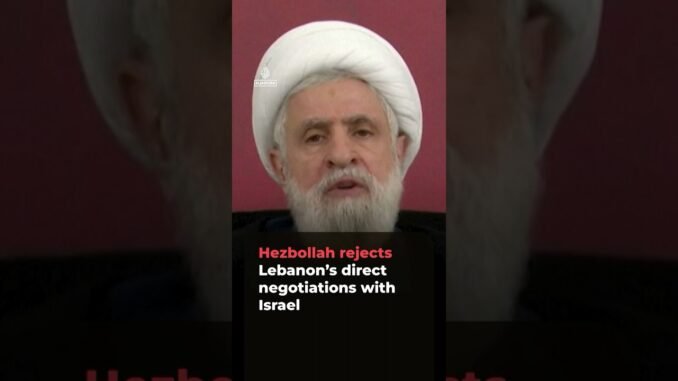

The tension in the Middle East continues to simmer as Hezbollah’s leader, Naim Qassem, delivered a fiery televised address on Monday, urging the Lebanese government to pull out of a scheduled meeting with Israeli officials in Washington.
Qassem’s statement comes at a critical moment when diplomatic channels were seemingly opening between the two neighboring nations that have maintained a complex and hostile relationship for decades. His words carried the weight of resistance that Hezbollah has long championed, promising unwavering opposition to any normalization with Israel.
A Defiant Stance Against Dialogue
In his address, the Hezbollah chief made it abundantly clear that his organization views any direct negotiations with Israel as a betrayal of Lebanese sovereignty and the Palestinian cause. The planned Washington meeting, which would have marked a significant diplomatic development, now faces serious internal opposition from one of Lebanon’s most powerful political and military forces.
“We would fight until our last breath,” Qassem declared, echoing the group’s long-standing position of resistance against Israel. This rhetoric is nothing new for Hezbollah, which has positioned itself as a defender of Lebanese territory and a key player in the broader regional alliance opposing Israeli policies.
What This Means for Lebanon
For Nigerians watching these developments, the situation might seem familiar. Just as our country navigates complex ethnic and religious dynamics while trying to maintain national unity, Lebanon faces similar challenges. The country’s government must balance various sectarian interests, with Hezbollah representing a significant portion of the Shia Muslim population.
The pressure on Lebanon’s government is immense. On one side, there may be international incentives and potential economic benefits from engaging with Israel, especially given Lebanon’s ongoing financial crisis. On the other, defying Hezbollah could destabilize the country’s delicate internal balance.
Regional Implications
This development doesn’t exist in a vacuum. The Middle East has witnessed surprising diplomatic shifts in recent years, with some Arab nations normalizing relations with Israel through the Abraham Accords. However, Lebanon—particularly with Hezbollah’s influence—has remained firmly in the resistance camp, aligned with Iran and Syria.
Qassem’s intervention serves as a reminder that despite changing regional dynamics, some positions remain entrenched. His call for the government to cancel the Washington talks demonstrates Hezbollah’s continued veto power over Lebanese foreign policy decisions, particularly those involving Israel.
The Bigger Picture
For those following international affairs from Nigeria, this situation highlights how non-state actors can significantly influence national policy. While our context differs, the principle remains relevant: powerful groups within nations can shape or constrain government actions, sometimes more effectively than formal opposition parties.
The phrase “fight until our last breath” also signals that Hezbollah sees this not merely as a political disagreement but as an existential matter. This level of commitment makes compromise difficult and raises concerns about potential escalation if the Lebanese government proceeds with the planned meeting.
What Happens Next?
The Lebanese government now faces a difficult choice. Will it proceed with the Washington meeting and risk internal conflict with Hezbollah, or will it bow to the pressure and cancel, potentially disappointing international partners?
As this story develops, the world watches to see whether dialogue or defiance will win the day in Lebanon. For a country that has experienced devastating civil war and continues to struggle with political paralysis and economic collapse, the stakes couldn’t be higher.
This story continues to develop. The international community awaits Lebanon’s response to Hezbollah’s demands as the scheduled Washington meeting approaches.
For more information, check buzzUp9ja
Be the first to comment