
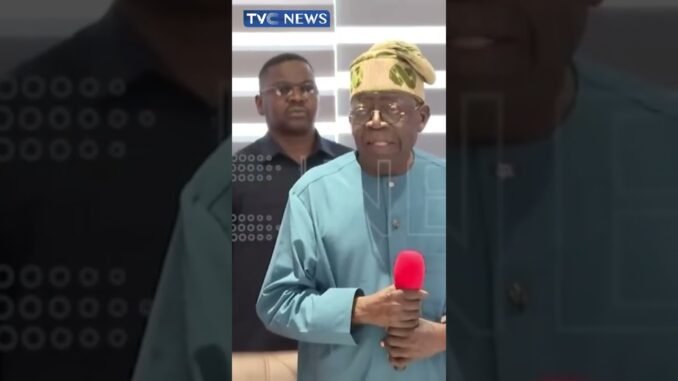

A former key adviser to President Bola Tinubu has painted a grim picture of Nigeria’s current state, declaring that the country now faces worse challenges than it did when the administration took over in May 2023.
Hakeem Baba-Ahmed, who previously served as Special Adviser to President Tinubu on Political Matters, did not mince words during a recent appearance on Trust TV. His frank assessment of the nation’s trajectory has sparked fresh conversations about governance, security, and the fulfillment of campaign promises.
“We Are in Deeper Trouble Now”
In what many Nigerians might consider a confirmation of their daily reality, Baba-Ahmed stated clearly: “We are in deeper trouble than when this administration came in. Violence has become more severe than anticipated.”
His assessment focused primarily on two critical areas that directly affect every Nigerian household—security and the economy. According to the former presidential aide, the situation has deteriorated significantly, with violence taking an increasingly dangerous turn across the country.
“Three years into the presidency, we are witnessing an escalation in both the pattern and impact of violence on citizens,” he observed, highlighting what many communities from the North-East to the South-East, and from the North-West to the South-South already know too well.
The Weight of Unfulfilled Promises
Baba-Ahmed’s criticism became even sharper when he reflected on the promises that brought the current administration to power. Like many Nigerians who cast their votes based on hope for a better tomorrow, he recalled the commitments made during the campaign season.
“This was a government that promised to end insecurity, improve lives, and create better conditions for Nigerians,” he said, before adding the painful truth many citizens are living: “The reality today suggests that these goals have not yet been achieved.”
For millions of Nigerians grappling with unprecedented economic hardship—from the removal of fuel subsidy to soaring food prices and a weakened naira—these words carry particular weight. The promise of “Renewed Hope” seems increasingly distant from the daily experience of struggling to afford basic necessities.
Questionable Priorities Amid National Crisis
Perhaps most striking was Baba-Ahmed’s criticism of the government’s sense of timing and priorities. He specifically referenced a recent official trip by President Tinubu and top government officials to the United Kingdom, questioning whether such travel was appropriate given the situation at home.
The trip, he noted, came shortly after a devastating attack in Borno State—one of the deadliest incidents in recent memory. The timing, in his view, sent the wrong message about the administration’s priorities at a moment when Nigerians needed to see decisive leadership focused on their immediate safety and welfare.
“Such developments highlight the growing concerns over governance priorities amid ongoing security challenges,” Baba-Ahmed stated, touching on a sentiment many Nigerians have expressed regarding what they perceive as disconnect between the government and the people’s reality.
A Nation at a Crossroads
Baba-Ahmed’s candid assessment comes at a particularly difficult time for Nigeria. Beyond insecurity, citizens are confronting multiple challenges simultaneously:
– Inflation continues to erode purchasing power, with many families unable to afford three meals a day
– The exchange rate crisis has made imports prohibitively expensive while local production struggles
– Unemployment remains stubbornly high, particularly among youth
– Basic infrastructure—from electricity to roads—remains inadequate despite promises of improvement
– Healthcare and education systems continue to deteriorate, sending those who can afford it abroad
What This Means for Nigerians
Coming from someone who once occupied a privileged position within this administration, Baba-Ahmed’s words carry significant weight. His willingness to speak truth to power, even about an administration he once served, represents the kind of accountability that genuine democratic governance requires.
For ordinary Nigerians, his assessment may serve as validation of their lived experiences—confirmation that the challenges they face daily are not imaginary or exaggerated, but real and worsening.
The question now is whether this frank acknowledgment from within the corridors of power will translate into concrete policy shifts and renewed commitment to addressing the issues Nigerians care about most: their safety, their economic wellbeing, and their hope for a better future.
As Nigeria continues to navigate these troubled waters, voices like Baba-Ahmed’s remind us that speaking uncomfortable truths, even when they concern those in power, remains essential to the democratic process and the pursuit of genuine progress.
—
What do you think about Baba-Ahmed’s assessment? Do his observations match your experience of Nigeria under the current administration? Share your thoughts in the comments below.
Visit buzzUp9ja for more details
Be the first to comment