
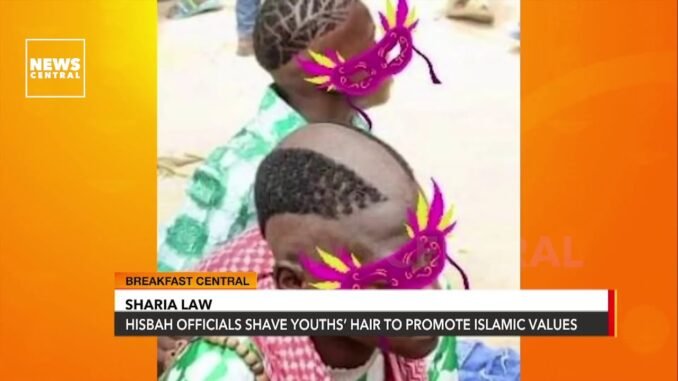

The Katsina State Hisbah Commission has once again stirred controversy after officials forcibly shaved the hair of young men in Sabuwa town during the recent Eid celebration.
In a statement released on Saturday, March 21, 2026, the Islamic police force defended the action, saying it was part of a broader operation aimed at maintaining peace and order during the Sallah festivities.
Operation “Happy Sallah”
The exercise, dubbed “Operation Happy Sallah,” was carried out across various locations in Sabuwa under the supervision of the division’s Hisbah Commander, DC Malam Idris Hayatu.
According to the statement, the operation targeted what the commission described as “stupidity, inappropriate behavior, and musical activities that cause noise and crowd-recognition.”
“The Hisbah Commission of Katsina State, Sabuwa Division, has launched a huge special program titled Operation Happy Sallah today, Saturday, 21 March, 2026, to ensure peace and cleanliness during Eid celebration,” the statement explained.
Commander Defends Action
Speaking on the forced haircuts, Commander Hayatu emphasized the commission’s dedication to maintaining law and order, particularly during what he termed “this critical time.”
He called on members of the public, especially young people, to “embrace good character and avoid any situation that may bring disharmony.”
Growing Concerns Over Hisbah Activities
This latest incident adds to the growing list of controversial actions by Hisbah officials across Northern Nigeria. While the Islamic police force maintains that its actions are in line with Sharia law and are meant to promote moral conduct, critics argue that such measures infringe on personal freedoms and human rights.
The practice of forcibly cutting youths’ hair—often targeting those with dreadlocks, afros, or trendy hairstyles—has become a recurring issue in states where Hisbah operates, sparking debates about religious enforcement and individual liberty.
As the conversation continues, many Nigerians are questioning where the line should be drawn between moral policing and personal freedom in a diverse, multi-religious society.
—
What are your thoughts on this development? Should religious police have the authority to enforce such measures? Share your views in the comments below.
follow for more insights on buzzUp9ja
Be the first to comment