
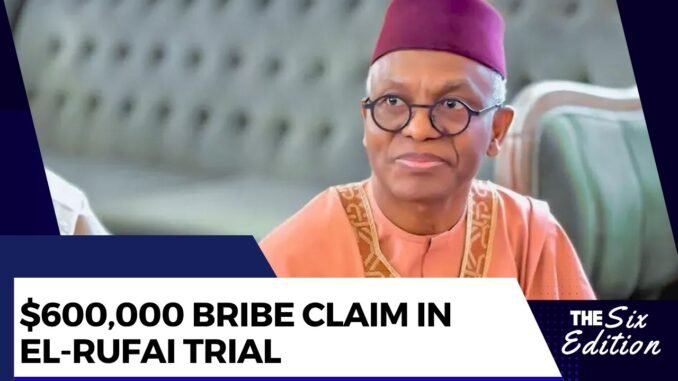

A bombshell allegation has rocked the ongoing trial of former Kaduna State Governor Nasir El-Rufai, as a Department of State Services (DSS) forensic investigator claimed in court that the ex-governor and some of his associates had allegedly set aside a whopping $600,000 to settle officials of the Economic and Financial Crimes Commission (EFCC).
The allegation, which was made by the DSS witness during proceedings, has sent shockwaves across Nigeria’s political and legal circles — and for good reason. If proven true, it would represent one of the most brazen attempts by a top Nigerian public official to compromise an anti-corruption agency.
What the DSS Witness Alleged
According to the forensic investigator who took the stand, El-Rufai and certain associates reportedly earmarked the sum of $600,000* — that is roughly *over ₦900 million at current exchange rates — with the alleged intention of influencing EFCC officials. The witness, testifying as part of ongoing legal proceedings, presented these claims as part of a broader forensic investigation.
Who Is Nasir El-Rufai?
For those who may need a refresher, Nasir Ahmad El-Rufai served as Governor of Kaduna State from 2015 to 2023*. Before that, he was the *Federal Capital Territory (FCT) Minister under former President Olusegun Obasanjo, where he became well known — and controversial — for demolishing illegal structures in Abuja. He has long been a polarising figure in Nigerian politics, celebrated by some as a reformer and criticised by others for his governance style.
Why This Allegation Matters
Nigerians have long lamented the culture of “settlement” — the practice of using money to silence investigations or buy off officials — as one of the biggest obstacles to fighting corruption in the country. If the allegations against El-Rufai are substantiated, it would underscore just how deeply entrenched this culture allegedly runs, even at the highest levels of government.
The EFCC itself has faced scrutiny over the years regarding its independence and susceptibility to political influence. This latest allegation, whether it holds up in court or not, will once again put that conversation front and centre.
What Happens Next?
The case is still ongoing, and it is important to note that allegations made in court are not convictions. El-Rufai and his legal team are expected to respond to these claims, and the full picture will only emerge as the trial progresses.
Nigerians will be watching closely. In a country where high-profile corruption cases have a tendency to drag on for years or quietly fizzle out, many are hoping this one will be different.
Stay with us as we continue to follow this developing story. Drop your thoughts in the comments — do you think Nigeria’s anti-corruption agencies can truly operate without interference?
Visit buzzUp9ja for more updates
Be the first to comment