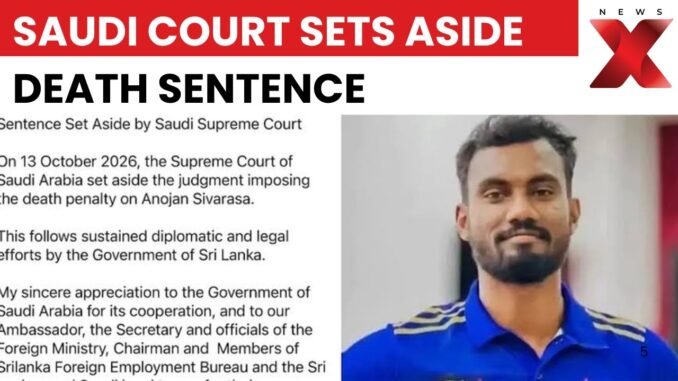

A Sri Lankan migrant worker who was facing execution over a Facebook comment has been given a new lease on life after Saudi Arabia’s Supreme Court overturned his death sentence — a development that is sending shockwaves across the global human rights community.
Saudi Arabia’s Supreme Court has set aside the death sentence that was handed down to a Sri Lankan migrant worker following a comment he made on Facebook, according to Colombo’s Deputy Foreign Minister.
The case, which had drawn widespread international attention and concern, highlights the very real dangers that social media posts can pose for migrant workers living and working in countries with strict laws governing speech and religious expression.
What Happened?
The Sri Lankan national, who had been working in Saudi Arabia — like thousands of other migrant workers from Asia and Africa — was sentenced to death over a comment he made on the popular social media platform Facebook. The exact nature of the comment has not been fully disclosed, but such cases in Saudi Arabia often involve allegations of blasphemy or content deemed offensive to Islam.
His case caught the attention of human rights organisations and his home government, with Sri Lanka’s diplomatic channels working tirelessly to secure his release.
Why This Matters for Nigerians
This story hits close to home for many Nigerians. With hundreds of thousands of Nigerian citizens living and working across the Middle East — particularly in Saudi Arabia, the UAE, and Qatar — the risks of falling foul of strict local laws are very real.
Many Nigerian workers in the Gulf region use social media daily to stay connected with family back home, share opinions, and express themselves. However, what may seem like an innocent post or comment from a Nigerian cultural perspective could carry serious legal consequences under the laws of their host country.
> If you or someone you know is working in Saudi Arabia or any other Gulf country, please take the time to understand the local laws around social media use and freedom of expression.
A Win, But a Warning
While the overturning of this death sentence is certainly good news and a relief, it serves as a sobering reminder of how quickly things can go wrong for migrant workers abroad.
Human rights groups have long raised alarm about the vulnerability of migrant workers in Gulf countries, many of whom lack adequate legal representation, face language barriers, and have limited access to their home country’s consular services when trouble arises.
What Nigerian Authorities Must Do
This case should prompt the Nigerian government to:
– Strengthen consular services in countries with large Nigerian migrant populations
– Educate citizens before they travel abroad about the legal landscape of their destination countries
– Establish emergency legal funds to assist Nigerians who face serious criminal charges overseas
– Engage more proactively with host governments on the rights and welfare of Nigerian workers
Final Thoughts
The Saudi Supreme Court’s decision to overturn this death sentence is a moment of relief — but the larger conversation around the safety, rights, and dignity of migrant workers must continue. Whether you are heading to Riyadh, Dubai, or Doha, knowledge is your first line of defence.
Stay informed. Stay safe. And think twice before you post.
Have thoughts on this story? Drop your comments below and share this article with anyone you know working or planning to work abroad.
Read the full story on buzzUp9ja
Be the first to comment