
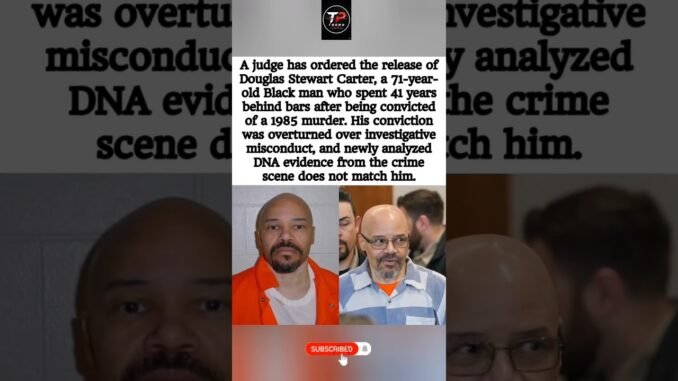

A shocking miscarriage of justice has come to light in the United States, as a man who spent decades awaiting execution is finally released after DNA evidence proved he was never the killer.
—
In a dramatic turn of events that has left many questioning the reliability of the justice system, a 71-year-old man in the United States state of Utah has been granted bail and released from prison — after spending decades on death row for a 1985 murder he may never have committed.
A Utah judge ordered his release after prosecutors revealed that newly analyzed DNA evidence* from the case showed *no match to the convicted man. In plain terms, the biological evidence gathered from the crime scene simply does not point to him — raising serious and troubling questions about how he ended up on death row in the first place.
How Does Someone Spend Decades on Death Row for a Crime They Did Not Commit?
For many Nigerians, this story may feel uncomfortably familiar. While this particular case happened thousands of kilometres away in America, the issue of wrongful conviction is one that cuts across borders. Across Nigeria, there are countless individuals — many of them poor, without access to quality legal representation — sitting in Kirikiri, Kuje, or other correctional facilities, waiting for justice that may never come.
This man spent the better part of his life — from his prime years well into old age — behind bars, under the shadow of an execution that could have come at any time. He entered that system as a middle-aged man and emerged at 71 years old. Let that sink in.
The Power of DNA Evidence
What ultimately saved this man was forensic science — specifically, DNA testing technology that was either unavailable or not properly utilised at the time of his original trial in the 1980s.
DNA evidence has become one of the most powerful tools in modern criminal justice. Unlike eyewitness testimony, which can be unreliable, or confessions, which can sometimes be coerced, DNA does not lie. When prosecutors went back and had the original evidence re-analyzed using modern techniques*, the results were clear — the DNA found at the crime scene belonged to *someone else, not the man who had been rotting away on death row.
This is a strong argument for why Nigeria must continue investing in forensic science infrastructure. Our courts still rely heavily on confessions and eyewitness accounts — methods that history has proven to be dangerously fallible.
A Wake-Up Call for Justice Systems Everywhere
This story is more than just an American headline. It is a wake-up call for every society that operates a criminal justice system — including Nigeria.
Consider these hard truths:
– Death sentences are irreversible. Had this man been executed before the DNA evidence was re-examined, there would have been no coming back from that. No amount of apology or compensation brings a dead man back to life.
– The justice system is run by humans — and humans make mistakes, sometimes catastrophic ones.
– Access to proper legal defence matters enormously. Many wrongful convictions happen because the accused could not afford experienced lawyers who might have challenged the evidence more rigorously.
What This Means for Nigeria
Back home, the conversation around death row and capital punishment* is one we cannot afford to avoid. Nigeria has one of the largest death row populations in Africa. Many of those individuals have been waiting *for years — sometimes over a decade — for their cases to be reviewed or their sentences to be carried out.
If a developed country like the United States, with all its resources and legal infrastructure, could get it this wrong for this long — what does that say about the risk of wrongful execution in systems with fewer resources and checks?
The good news is that it is never too late for justice*. This 71-year-old man’s story proves that. But the better goal — the one we should all be fighting for — is a justice system rigorous enough to *get it right the first time.
This case continues to develop. As more details emerge about the original 1985 case and how the wrongful conviction occurred, the story promises to shed even more light on the urgent need for justice reform worldwide.
For more information, check buzzUp9ja
Be the first to comment