
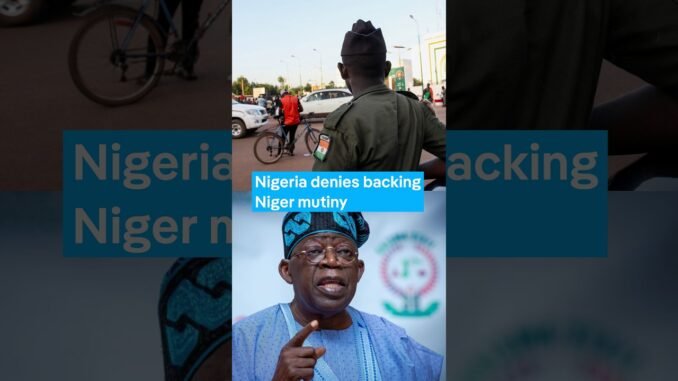

Summary: *The Federal Government has strongly dismissed viral social media claims linking Nigeria and ECOWAS to the recent failed coup attempt in Niger Republic. Here’s everything you need to know.*
As social media timelines buzzed with allegations and conspiracy theories, the Federal Government of Nigeria has come out swinging — firmly rejecting claims that Nigeria and the Economic Community of West African States (ECOWAS) had a hand in the recent failed coup attempt in Niger Republic.
What Exactly Is Being Said?
If you’ve been scrolling through your Twitter (now X) or Facebook feeds lately, you may have stumbled upon posts suggesting that Nigeria, through its leadership role in ECOWAS, quietly supported or even orchestrated the coup attempt that rocked Niamey. The claims spread like wildfire — as these things tend to do on Nigerian social media — leaving many Nigerians and West Africans asking serious questions.
Abuja Says: Not True
The Federal Government has moved swiftly to shut down the narrative. In a clear and direct statement, Nigerian authorities categorically denied any involvement in or support for the coup attempt in Niger Republic. The government described the allegations as false and misleading, urging Nigerians and the international community not to be swayed by unverified information making the rounds online.
This denial comes at a particularly sensitive time, given Nigeria’s prominent role as a leading voice within ECOWAS — a bloc that has consistently championed democratic governance across the West African sub-region.
Why This Matters for Nigeria and the Region
Make no mistake — what happens in Niger Republic does not stay in Niger Republic. As one of Nigeria’s closest northern neighbours, instability in Niger has direct implications for security along Nigeria’s borders, particularly in states like Sokoto, Kebbi, Katsina, and Borno, which are already grappling with the threats of banditry and insurgency.
Nigeria and Niger share not just a border, but deep ethnic, cultural, and trade ties that go back centuries. The Hausa-Fulani communities straddle both sides of the border, and any prolonged political crisis in Niamey will inevitably send ripples southward.
ECOWAS Under the Spotlight
ECOWAS, the 15-member regional bloc that Nigeria has long anchored, has in recent years found itself in a tough spot — balancing the principle of non-interference with the need to defend democracy. After the military takeover that ousted Niger’s President Mohamed Bazoum, ECOWAS issued strong warnings and even threatened military intervention, a position that drew both support and sharp criticism across the continent.
It is within this charged atmosphere that the rumours of Nigeria and ECOWAS “backing” a counter-coup began to gain traction — allegations that Abuja has now firmly put to rest.
The Takeaway
In a region where trust between governments and citizens is already fragile, misinformation can be dangerously destabilising. The Federal Government’s swift response is a reminder that in today’s world, the battle for narrative control is just as important as diplomacy itself.
For now, Nigeria’s position is clear: it did not back any coup — failed or otherwise — in Niger Republic, and it remains committed to peaceful, democratic solutions to the political crisis unfolding in its northern neighbour.
Stay informed. Verify before you share. The truth matters — especially when regional peace is on the line.
Stay ahead with buzzUp9ja
Be the first to comment