
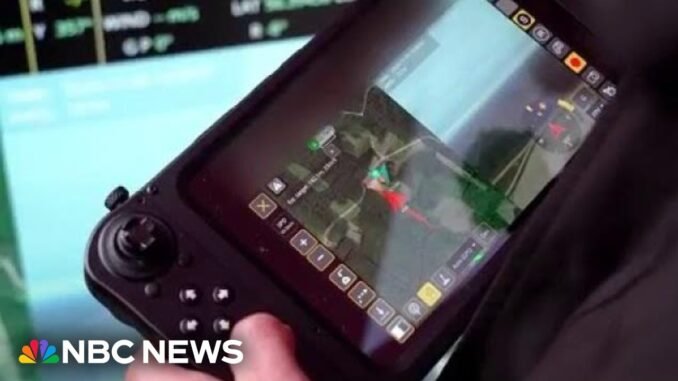

Summary: Ukraine has taken modern warfare to a whole new level by deploying ground combat robots from drones behind Russian lines. Find out how this game-changing tactic works and what it means for the future of warfare.
If you think the kind of robotic warfare you see in Hollywood action films is still far away, think again. Ukraine just made history on the battlefield — and the world is paying close attention.
In a move that has left military analysts and defence experts shaking their heads in disbelief, Ukraine has successfully used a heavy-lift drone to drop a combat ground robot behind enemy lines* in Russia. According to reports, this is the *first known military attack in history to involve a drone deploying another robot for ground combat. Yes, you read that correctly — a drone carrying another robot to go and fight. The future is truly here.
So, How Did This Work Exactly?
Think of it like this: imagine you are playing a chess game, but instead of moving your pieces across the board yourself, you send a flying piece to drop a fighting piece right in the middle of your opponent’s territory. That is essentially what Ukraine pulled off.
A large, powerful drone — the kind built to carry heavy loads — was used to airlift a ground combat robot and deposit it on Russian soil, behind their defensive lines. Once on the ground, the robot was then used to carry out the attack. This kind of tactic completely bypasses traditional frontline defences, making it extremely difficult for the enemy to prepare or respond in time.
Why This Is a Big Deal
To understand why this is significant, consider the challenges of traditional warfare. Sending human soldiers behind enemy lines is extremely dangerous and costly — both in terms of lives and resources. Armoured vehicles can be detected and destroyed before they even get close.
But a drone? That is a different story entirely. Drones are harder to detect, faster to deploy, and most importantly — no human life is put at direct risk during the operation.
By combining drone technology with ground robotics, Ukraine has essentially created a two-layered autonomous attack system. It is the kind of military innovation that changes the rules of engagement entirely.
What This Means for Modern Warfare
Military experts have long predicted that the future of warfare would be dominated by unmanned systems — robots, drones, and artificial intelligence. What Ukraine has done is essentially accelerate that future and bring it into the present.
For African nations, including Nigeria, that are investing in defence modernisation, this development is a wake-up call. The battlefield of tomorrow will not just be about manpower or even firepower — it will be about technological superiority.
Nigeria’s military, like many others across the continent, has been gradually adopting drone technology for surveillance and operations in the Northeast against Boko Haram and ISWAP. Events like this serve as a strong reminder that the pace of military technological advancement globally is moving very fast, and staying ahead of the curve matters.
The Bigger Picture
Ukraine’s deployment of combat robots from drones is not just a clever battlefield trick — it represents a fundamental shift in how wars will be fought. Countries that invest early in these technologies will have a decisive edge over those that do not.
As this conflict in Eastern Europe continues to serve as a live testing ground for cutting-edge military technology, the rest of the world — including Nigeria and the broader African continent — would do well to study these developments carefully.
One thing is clear: the era of robotic warfare is no longer science fiction. It is happening right now, and Ukraine just wrote the first chapter.
What do you think about the rise of combat robots in modern warfare? Drop your thoughts in the comments section below.
For more updates, visit buzzUp9ja
Be the first to comment