
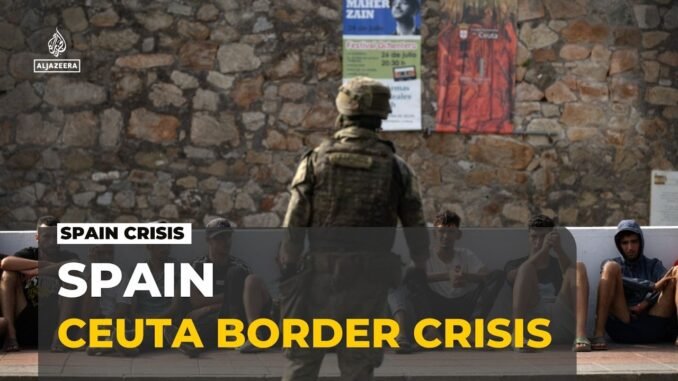

The deadly mass border crossing at Ceuta has sparked a fierce political blame game between Spain and Morocco, raising urgent questions about migration policy, human rights, and the lives of desperate Africans seeking a better future.
The president of Spain’s North African enclave of Ceuta has pointed an accusing finger at Morocco, describing a recent catastrophic mass border crossing as an outright “atrocity” — one that claimed the lives of more than 90 people.
For many Nigerians who understand the desperate dream of seeking greener pastures abroad, this tragedy hits painfully close to home.
What Happened at Ceuta?
Ceuta is a small Spanish territory sitting on the northern tip of Africa, sharing a border with Morocco. For years, it has served as one of the most dangerous flashpoints in the global migration crisis — a place where the hunger for a better life collides violently with heavily fortified borders and political brinkmanship.
In the latest deadly incident, hundreds of migrants attempted to cross the border en masse, and the result was catastrophic. Over 90 people lost their lives in what witnesses and officials described as scenes of absolute chaos and desperation.
The Blame Game Begins
Juan Jesús Vivas, the president of the Ceuta regional government, wasted no time placing the blame squarely at Morocco’s doorstep. According to him, Moroccan authorities either facilitated or turned a blind eye to the dangerous crossing, effectively using desperate migrants as political pawns in an ongoing diplomatic dispute with Spain.
This is not the first time Morocco has been accused of weaponising migration. In 2021, a similar crisis erupted when thousands of migrants — many of them young men from sub-Saharan Africa — suddenly surged into Ceuta after Morocco appeared to relax its border controls during a diplomatic spat with Madrid.
Morocco, for its part, has consistently denied deliberately orchestrating these crossings, arguing instead that it shoulders an enormous and largely thankless burden in managing migration flows on behalf of Europe.
The Human Cost Nobody Wants to Talk About
Behind the political back-and-forth are real human beings — many of them young Africans, including Nigerians and other West Africans — who risked everything for a shot at survival.
Ask anyone in Lagos, Kano, or Enugu, and they will tell you stories of brothers, cousins, or neighbours who embarked on the dangerous “back way” journey through the Sahara Desert and North Africa, hoping to eventually reach Europe. The route through Morocco into Ceuta or the Canary Islands is one of the most treacherous legs of that journey.
These are not criminals or troublemakers. They are people driven by poverty, insecurity, unemployment, and the desperate hope that somewhere — anywhere — offers a better chance at life.
A Wider Crisis That Affects Nigeria
Nigeria consistently ranks among the top countries of origin for migrants attempting to reach Europe through North Africa. According to the International Organization for Migration (IOM), thousands of Nigerians have died in the Sahara Desert and the Mediterranean Sea over the past decade — far more than will ever make the headlines.
The Ceuta tragedy is therefore not just a Spanish or Moroccan problem. It is an African problem. It is a Nigerian problem.
Every life lost at that border represents a failure — a failure of African governments to create the conditions that would make such desperate journeys unnecessary, and a failure of the international community to treat migration with the humanity and seriousness it deserves.
What Needs to Change?
The conversation cannot remain trapped in diplomatic blame-trading between Rabat and Madrid. Several urgent questions demand answers:
– Why are African nations still unable to provide enough opportunities to stop their young people from risking death to flee the continent?
– Why does Europe continue to outsource its border management to countries like Morocco, effectively paying them to contain human beings?
– When will African leaders take collective responsibility for the migration crisis instead of leaving individual families to mourn in silence?
The Bottom Line
The deaths of over 90 people at the Ceuta border should shake all of us out of complacency. Whether Spain blames Morocco or Morocco deflects responsibility back to Europe, the inconvenient truth remains: desperate people will keep coming as long as desperation drives them.
Until African governments — including Nigeria’s — prioritise genuine economic development, security, and opportunity for their young people, tragedies like Ceuta will continue to repeat themselves.
And somewhere, another family will be left waiting for a phone call that will never come.
What do you think needs to be done to address Africa’s migration crisis? Share your thoughts in the comments below.
Visit buzzUp9ja for more headlines
Be the first to comment