
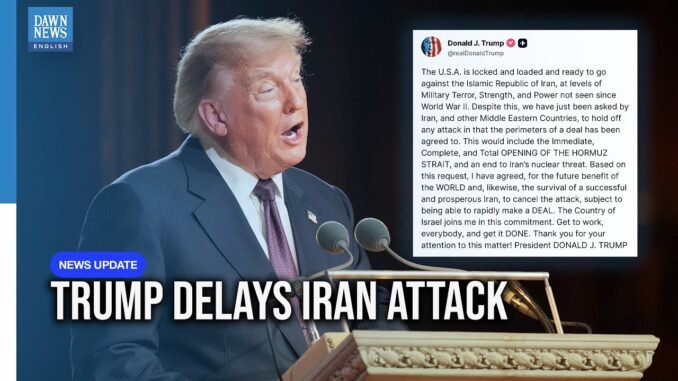

Summary: U.S. President Donald Trump says America will pause military strikes on Iran as both nations inch closer to a historic nuclear agreement. Here’s everything you need to know.
America and Iran may be stepping back from the brink of war — at least for now.
U.S. President Donald Trump announced on Saturday that the United States has agreed to pause its attacks on Iran, revealing that both nations have reached what he described as the “perimeters of a deal” — a major diplomatic development that has caught the attention of world leaders, including those across Africa and the Middle East.
So What Exactly Is Happening?
In simple terms, Trump is saying: “We will hold our fire — but Iran must move fast.”
The pause in hostilities comes as negotiations between Washington and Tehran appear to be gaining serious momentum. According to Trump, the framework of an agreement has been sketched out, and part of that deal reportedly includes the reopening of diplomatic channels between the two long-time adversaries.
For those who have been following the back-and-forth tension between the U.S. and Iran — think of it like two heavyweight fighters who have been trading verbal jabs for years suddenly agreeing to sit down at the table — this is a significant moment.
Why Should Nigerians Care?
You might be wondering, “Abeg, how does this affect us here in Nigeria?” — and that is a very valid question.
Here is the thing: global oil prices are directly tied to stability in the Middle East. Iran is one of the world’s largest oil producers, and any military conflict involving the country sends crude oil prices skyrocketing. As a nation that still depends heavily on oil revenues to fund its national budget, Nigeria feels every shake and shiver in the global energy market.
When tensions rise between the U.S. and Iran:
– Petrol prices can climb higher at the pump
– The naira faces more pressure as dollar earnings from oil become unpredictable
– Import costs go up, squeezing everyday Nigerians at the market
So yes — what happens in Washington and Tehran does not stay there. It lands right here in Lagos, Abuja, Kano, and Port Harcourt.
Trump’s Conditions Are Clear
The American president made it abundantly clear that this pause is not a permanent ceasefire — it is conditional. Iran must move “rapidly” to finalise and sign a deal, or all bets are off.
This is classic Trump negotiating style — the same approach he used in trade talks with China and during his first term with North Korea. He dangles the olive branch but keeps one hand close to the stick.
Whether Iran’s leadership, particularly Supreme Leader Ali Khamenei, will accept the terms being proposed remains to be seen. Tehran has historically been resistant to external pressure, and any deal touching on its nuclear programme — which is widely believed to be at the heart of these negotiations — will require significant concessions from both sides.
The Bigger Picture
This development comes at a time when the world is already navigating multiple flashpoints — from the ongoing conflict in Ukraine to instability across parts of West Africa. A U.S.-Iran deal, if it materialises, could bring a measure of global stability that benefits emerging markets like Nigeria.
Diplomats, analysts, and market watchers will be keeping a very close eye on how quickly these negotiations progress. As for ordinary Nigerians, the hope is simple: less conflict, lower oil market volatility, and a bit of breathing room for the economy.
We will be watching closely. Make we see how e go play out.
Stay with us for updates as this story develops.
Keep up with the latest on buzzUp9ja
Be the first to comment