
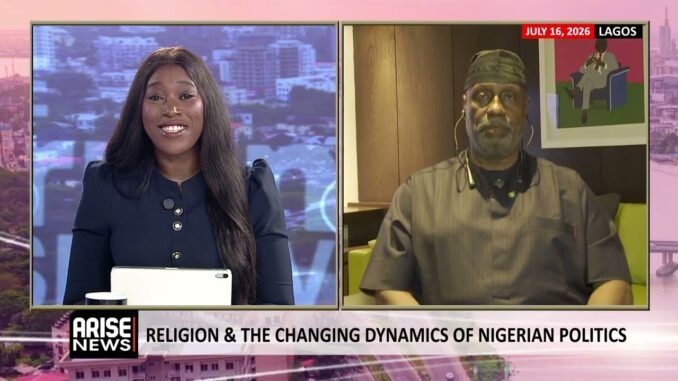

A top APC stakeholder says the tide has turned, and Nigerian Christians are warming up to the Tinubu-Shettima pairing. But is this really the case?
An All Progressives Congress (APC) chieftain has stirred fresh conversation in Nigeria’s political space, claiming that Christians across the country have grown significantly more comfortable with the party’s controversial Muslim-Muslim presidential ticket than they were before the 2023 general elections.
If you cast your mind back to the period leading up to the February 2023 elections, you’ll remember that the decision by the APC to pair Bola Ahmed Tinubu — a Muslim from Lagos — with Kashim Shettima — also a Muslim from Borno State — as running mate, set off a firestorm of debate from Abuja to Abeokuta, from Enugu to Port Harcourt.
Many Christian groups, including the powerful Christian Association of Nigeria (CAN), publicly kicked against the arrangement, arguing that it was insensitive to Nigeria’s delicate religious balance. For a country where religion is as important as jollof rice at a party, the all-Muslim ticket felt to many like a deliberate snub to the significant Christian population.
So, What Has Changed?
According to this APC chieftain, time — and perhaps governance — has done its work. The argument being pushed is that since President Tinubu assumed office in May 2023, Christians have seen that their interests have not been sidelined, and that the fears many harboured before the election have not materialised in the way critics predicted.
This claim will no doubt spark fresh debate among Nigerians, many of whom remain deeply invested in how religion intersects with politics and governance in our dear country.
A Nation That Takes Religion Seriously
Let’s be honest — Nigeria is not a country where you can easily separate religion from politics. With roughly equal populations of Christians and Muslims, every major political decision is viewed through a religious lens. It is why Northern governors consult with Islamic scholars, and why Southern politicians rarely miss a Sunday service during campaign season.
The Muslim-Muslim ticket was always going to be a lightning rod. The question now is whether the passage of time and the realities of governance under Tinubu have genuinely shifted Christian sentiment — or whether this APC chieftain is simply doing what politicians do best: managing perception ahead of future elections.
What Nigerians Are Saying
On the streets of Lagos, in the markets of Onitsha, and in the churches of Ibadan, opinions remain divided. Some Christians who were initially opposed to the ticket have admitted that governance has been somewhat fair in terms of representation. Others, however, insist that their concerns were never just about appointments, but about the symbolism and precedent such a ticket sets for Nigeria’s democracy.
One thing is clear — this conversation is far from over. As Nigeria edges closer to another election cycle, the Muslim-Muslim ticket debate will continue to be a talking point that politicians, religious leaders, and ordinary Nigerians will keep revisiting.
What do you think? Have your views on the Muslim-Muslim ticket changed since 2023? Drop your thoughts in the comments below.
Get more information on buzzUp9ja
Be the first to comment