
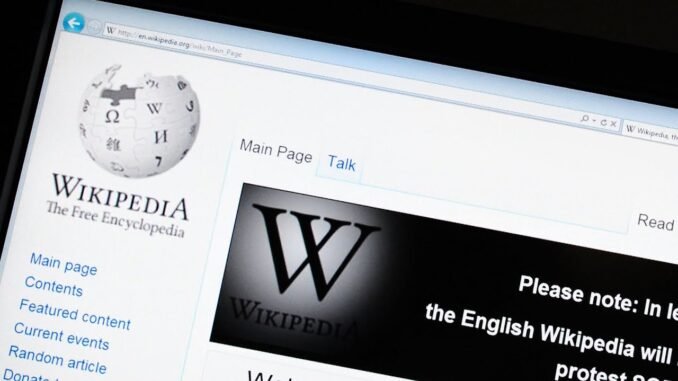

In a move that has sparked conversations across the tech world, Wikipedia has drawn a clear line in the sand: artificial intelligence will not be allowed to edit articles on the platform directly.
Jimmy Wales, the co-founder of the world’s largest online encyclopedia, recently shared the reasoning behind this firm stance, and it boils down to one crucial issue—trust. Or rather, the lack of it when it comes to AI accuracy.
Why Wikipedia Doesn’t Trust AI Editors
For those of us in Nigeria who rely on Wikipedia for quick information—whether you’re a student researching for JAMB, a professional preparing a presentation, or just settling an argument with your friends about who won Big Brother Naija in 2019—the platform’s commitment to accuracy matters deeply.
Wales explained that Wikipedia’s concerns center around ongoing issues with AI inaccuracy. Anyone who has used ChatGPT or other AI tools knows they can sometimes “hallucinate”—a fancy tech term for making up information that sounds convincing but is completely false.
The Human Touch Still Matters
Wikipedia has built its reputation over two decades on a simple but powerful model: human volunteers who are passionate about accuracy and truth. These editors review, fact-check, and debate every change made to articles. It’s a system that has worked remarkably well, making Wikipedia one of the most visited websites globally.
Allowing AI to bypass this human verification process would be like letting a generator run without anyone checking the oil level—it might work for a while, but disaster could strike at any moment.
What This Means for the Future
The decision reflects a broader conversation happening worldwide about AI’s role in information sharing. While AI tools can be helpful for research and writing assistance, Wikipedia’s stance suggests that when it comes to creating and maintaining factual content that millions depend on, human oversight remains irreplaceable.
For Nigerian users who contribute to or rely on Wikipedia—and yes, there are many Nigerian editors who help maintain articles about our culture, history, and current affairs—this news is reassuring. It means the information you find about Nnamdi Azikiwe, Fela Kuti, or the Nigerian Civil War has been verified by real people, not generated by an algorithm that might confuse Lagos with Lekki or Oyo State with Oyo town.
The Bottom Line
Wikipedia’s refusal to let AI edit articles directly isn’t about being anti-technology. It’s about maintaining the trust that has made the platform an indispensable resource for billions of people worldwide. In an era where misinformation spreads faster than jollof rice disappears at a Nigerian party, that commitment to accuracy is more valuable than ever.
As we continue to navigate the AI revolution, Wikipedia’s approach offers an important lesson: some tasks still require the human touch, especially when truth and accuracy are on the line.
What do you think about Wikipedia’s decision? Should AI be allowed to edit articles with human supervision, or is Wikipedia right to keep it completely out? Share your thoughts in the comments below.
Explore more stories on buzzUp9ja
Be the first to comment