
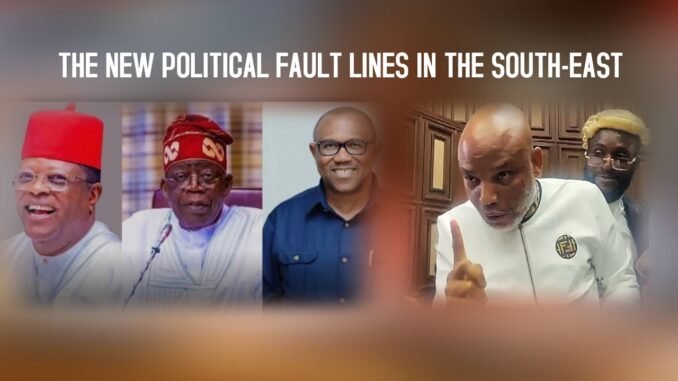

The Minister of Works, Senator David Umahi, has disclosed that leaders from the South-East region are actively exploring political avenues to secure the release of detained Indigenous People of Biafra (IPOB) leader, Nnamdi Kanu.
Speaking recently, the former Ebonyi State governor emphasized that regional leaders are committed to finding a lasting solution to the matter while maintaining peace and stability across the South-East zone.
A Delicate Balance
Umahi’s revelation comes at a time when the issue of Kanu’s continued detention has remained a contentious topic in Nigerian political discourse. The IPOB leader has been in the custody of the Department of State Services (DSS) since his controversial re-arrest in June 2021, following what the federal government described as an interception and extradition from Kenya.
The Minister’s statement suggests that South-East leaders are adopting a diplomatic approach, seeking to balance the quest for Kanu’s freedom with the federal government’s security concerns and the need for regional tranquility.
Political Solution: What Does It Mean?
A “political solution” typically involves high-level negotiations, dialogue, and compromise between stakeholders. In Kanu’s case, this could mean:
– Engagement with the presidency and relevant security agencies
– Assurances regarding peace and order in the South-East
– Possible conditions or undertakings from Kanu or IPOB leadership
– Legal considerations that could facilitate his release without undermining the justice system
The South-East Security Situation
The detention of Nnamdi Kanu has been linked to the security challenges that have plagued the South-East in recent years. Unknown gunmen have attacked security formations, government facilities, and individuals, creating an atmosphere of fear and uncertainty in the region.
Many stakeholders, including traditional rulers, religious leaders, and political figures, have called for Kanu’s release as a potential step toward restoring lasting peace to the zone. They argue that his detention has become a rallying point for agitators and that a political resolution could help de-escalate tensions.
Previous Calls for Kanu’s Release
Senator Umahi is not the first prominent voice to advocate for Kanu’s release. Over the past months and years, several groups and individuals have made similar calls:
– South-East governors have at various times appealed to President Bola Tinubu to consider releasing Kanu
– Traditional rulers and Igbo socio-cultural organizations like Ohanaeze Ndigbo have consistently pushed for his freedom
– Some National Assembly members from the zone have sponsored motions calling for a political solution
– International human rights organizations have raised concerns about the circumstances of his arrest and detention
Legal Battles Continue
While political efforts intensify, Kanu’s legal team has continued to fight his detention in court. They have challenged the legality of his extradition and argued that his fundamental human rights have been violated.
The Court of Appeal had previously discharged Kanu in October 2022, ruling that his extraordinary rendition from Kenya violated international laws and breached his fundamental rights. However, the federal government appealed the decision, and the matter is currently before the Supreme Court.
What Nigerians Are Saying
Public opinion on Kanu’s case remains divided along ethnic, regional, and political lines. While many in the South-East view him as a freedom fighter championing the rights of marginalized Igbos, others across the country see him as a divisive figure whose rhetoric threatens national unity.
Some Nigerians believe a political solution could help heal wounds and foster reconciliation, while others insist that the law must take its full course regardless of political considerations.
The Way Forward
As South-East leaders continue their behind-the-scenes negotiations, many are hopeful that a breakthrough will emerge. For such a solution to succeed, it would likely require:
1. Genuine commitment from all parties – including the federal government, South-East leaders, and IPOB supporters
2. Clear conditions and assurances – regarding peace, security, and respect for Nigeria’s sovereignty
3. Buy-in from the wider Nigerian public – to avoid perceptions of special treatment or regional favoritism
4. Legal considerations – ensuring any resolution respects judicial processes and the rule of law
Conclusion
Senator Umahi’s statement offers a glimmer of hope to those advocating for Nnamdi Kanu’s release. Whether these political efforts will yield results remains to be seen, but they represent a significant acknowledgment by regional leaders that the status quo is unsustainable.
As Nigeria continues to grapple with various security challenges across different regions, the search for lasting solutions requires not just military might but also political wisdom, dialogue, and compromise. The Kanu case presents an opportunity to test whether Nigeria’s political class can rise above partisan divisions to forge consensus on difficult national issues.
What are your thoughts on the political solution being explored for Nnamdi Kanu’s release? Do you think it’s the right approach? Share your views in the comments below.
For more information, check buzzUp9ja
Be the first to comment