
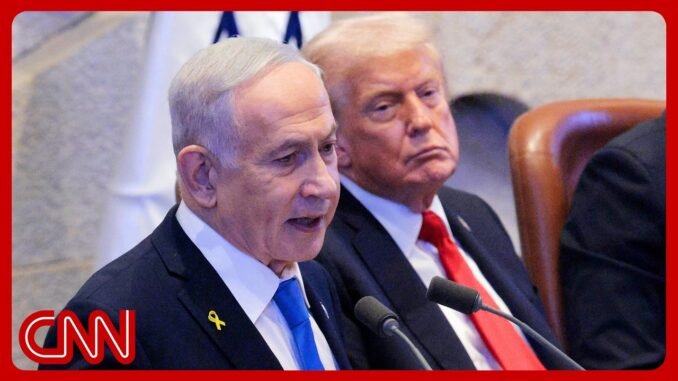

Summary: Israeli PM Benjamin Netanyahu acknowledges disagreements with President Trump over Lebanon operations, insisting Israel’s security concerns persist despite regional peace efforts.
In a rare public acknowledgment of diplomatic friction, Israeli Prime Minister Benjamin Netanyahu has admitted that his relationship with United States President Donald Trump is not always smooth sailing, particularly regarding Israel’s recent military operations in Lebanon.
The candid revelation comes amid growing tension between the two long-time allies, with Trump reportedly expressing frustration over Israel’s continued strikes in Lebanese territory. For Nigerians familiar with complex diplomatic relationships—much like our own intricate regional partnerships within ECOWAS—this development highlights how even the strongest alliances can face challenging moments.
The Core of the Disagreement
Netanyahu’s statement, “we don’t always see eye-to-eye,” represents a significant departure from the typically cordial public stance both leaders have maintained throughout their political relationship. The Israeli Prime Minister made these comments while defending his country’s military posture, insisting that threats to Israeli security remain active despite recent peace agreements in the region.
The Trump administration has been pushing for de-escalation across the Middle East, seeking to build on previous peace deals brokered during his first term in office. However, Netanyahu’s government maintains that Israel faces unique security challenges that require decisive military action, particularly concerning activities in Lebanon.
Israel’s Security Concerns Persist
Despite the existence of various peace frameworks in the Middle East, Netanyahu emphasized that Israel cannot afford to lower its guard. The Prime Minister argued that his nation continues to face existential threats that justify maintaining an aggressive defensive posture.
“The threat is not over,” Netanyahu reportedly stated, making it clear that Israel’s military operations would continue based on what his government perceives as legitimate security needs, regardless of international pressure—including from Washington.
This stance resonates with anyone who understands national security imperatives. Much like Nigeria’s ongoing efforts to secure its borders and protect citizens from various threats, Israel’s leadership argues it must prioritize its people’s safety above diplomatic convenience.
Trump’s Growing Frustration
Sources indicate that President Trump has become increasingly impatient with Israel’s military activities in Lebanon, viewing them as potentially destabilizing to his broader Middle East peace strategy. The American president, known for his transactional approach to foreign policy, reportedly expected greater Israeli cooperation in exchange for continued US support.
This dynamic mirrors situations many Nigerians have witnessed in international relations—where larger powers expect smaller nations to align their policies with broader regional strategies, sometimes at the expense of immediate national interests.
What This Means for Middle East Stability
The public acknowledgment of disagreement between Netanyahu and Trump raises questions about the future of US-Israel relations and regional stability. While the alliance between the two nations remains strong, based on decades of strategic partnership and shared interests, these visible cracks suggest potential complications ahead.
For observers of international politics in Nigeria and across Africa, this development serves as a reminder that diplomatic relationships are rarely straightforward, even between the closest of allies. National interests, domestic political pressures, and differing threat assessments can all create friction in international partnerships.
The Broader Regional Context
The Netanyahu-Trump tension unfolds against the backdrop of a complex Middle Eastern landscape, where various peace initiatives exist alongside ongoing conflicts. Iran remains a central concern for both the United States and Israel, though the two nations sometimes differ on how best to address the perceived Iranian threat.
Lebanon, caught between various regional powers and dealing with its own internal challenges, finds itself once again at the center of international attention. The country’s complicated political structure and the presence of various armed groups make it a focal point for regional security concerns.
Looking Ahead
As the situation develops, several questions remain unanswered:
– Will Trump’s frustration lead to any shift in US policy toward Israel?
– How will Netanyahu balance domestic political pressures with the need to maintain strong US support?
– What impact will this tension have on broader Middle East peace efforts?
For now, both leaders appear committed to maintaining their alliance while navigating their differences on tactical matters. However, the public nature of Netanyahu’s acknowledgment suggests that the disagreements may be more significant than either side would prefer.
The Nigerian Perspective
From a Nigerian viewpoint, this situation offers valuable lessons about international relations and national sovereignty. Like Israel, Nigeria must balance its relationships with powerful international partners while protecting what it perceives as its core national interests. The ability to maintain strategic friendships while asserting independence on crucial security matters remains a delicate diplomatic art.
As this story continues to unfold, it serves as another reminder that in international politics, there are no permanent friends or enemies—only permanent interests. Netanyahu’s willingness to publicly acknowledge disagreement with Trump, while potentially risky, also demonstrates a confidence in the fundamental strength of the US-Israel relationship.
The coming weeks will reveal whether this diplomatic friction represents a temporary disagreement or signals a more significant shift in one of the world’s most important bilateral relationships.
Visit buzzUp9ja for more information
Be the first to comment