
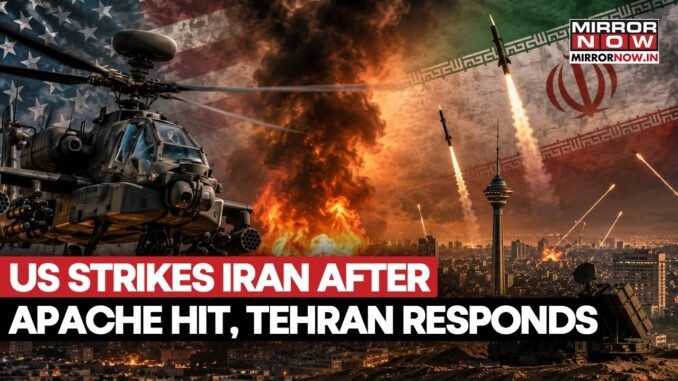

Summary: Tensions between Iran and the United States have reached a boiling point as Tehran fires missiles and drones at American military installations in response to retaliatory strikes over a downed helicopter.
The already fragile relationship between Iran and the United States has taken a dangerous turn as the Islamic Revolutionary Guard Corps (IRGC) launched a coordinated missile and drone assault on American military targets in the region. This aggressive move represents one of the most serious escalations in hostilities between the two nations in recent times.
What Triggered This Latest Crisis?
The Iranian attack comes as a direct response to American retaliatory strikes that were carried out following the downing of a US military helicopter. While the exact circumstances surrounding the helicopter incident remain under investigation, the swift chain of retaliatory actions has pushed tensions to a critical level.
For Nigerians following global affairs, this development is particularly concerning given its potential impact on oil markets and regional stability. As a major oil-producing nation ourselves, Nigeria often feels the ripple effects when tensions flare in the Middle East, one of the world’s most strategic petroleum-producing regions.
Understanding the Players
The Islamic Revolutionary Guard Corps (IRGC) is not your regular military force. Think of them as Iran’s elite security apparatus – a powerful organization that operates independently from the conventional Iranian military. They control significant portions of Iran’s economy, run military operations, and have considerable influence over the country’s foreign policy decisions.
On the other side, the United States maintains multiple military installations across the Middle East, from Iraq to the Gulf states, as part of its strategic presence in the region. These bases serve as operational hubs for American forces monitoring regional security and protecting US interests.
The Broader Implications
This latest confrontation didn’t happen in a vacuum. US-Iran relations have been strained for decades, with various flashpoints including:
– The US withdrawal from the Iran nuclear deal
– Economic sanctions that have crippled Iran’s economy
– Proxy conflicts across the Middle East
– The assassination of Iranian General Qasem Soleimani in 2020
– Ongoing disputes over Iran’s nuclear program
For Nigeria, watching these developments closely makes sense. Any major conflict in the Persian Gulf region could disrupt global oil supplies, sending prices skyrocketing. While this might seem beneficial for oil-producing nations in the short term, the reality is more complex. Global economic instability typically reduces demand for oil, and supply chain disruptions can affect everything from petrol prices at Nigerian filling stations to the cost of imported goods.
Regional Concerns
Countries in the Middle East are watching nervously as this situation unfolds. Iraq, which hosts both American military personnel and Iranian-backed militia groups, finds itself in a particularly precarious position. The Gulf states, while generally aligned with US interests, are also keen to avoid becoming collateral damage in any expanded conflict.
What Happens Next?
The international community, including the United Nations, is likely to call for restraint from both sides. However, the cycle of attack and retaliation has a dangerous momentum of its own. Each side feels compelled to respond to maintain credibility and deter future attacks.
The coming days will be crucial. Will diplomatic channels prevail, or are we witnessing the opening moves of a broader military confrontation? The answer could have profound implications not just for the Middle East, but for the entire global community.
The Nigerian Perspective
As Nigerians, we understand the importance of maintaining peace and stability in our own region. The situation between Iran and the US reminds us that conflicts between major powers can have far-reaching consequences. Our economy, our fuel prices, and even the cost of basic commodities can be affected by events thousands of miles away.
This is why Nigerian leaders and diplomats must stay engaged with global affairs and work within international bodies like the African Union and the United Nations to promote dialogue and peaceful resolution of conflicts.
The world has become too interconnected for any nation to ignore major international flashpoints. What happens in the Persian Gulf today could very well determine what we pay for petrol, bread, and rice tomorrow.
As this situation continues to develop, staying informed and understanding the broader implications becomes not just a matter of following the news, but of understanding the forces shaping our increasingly interconnected world.
Follow for more news on buzzUp9ja
Be the first to comment