
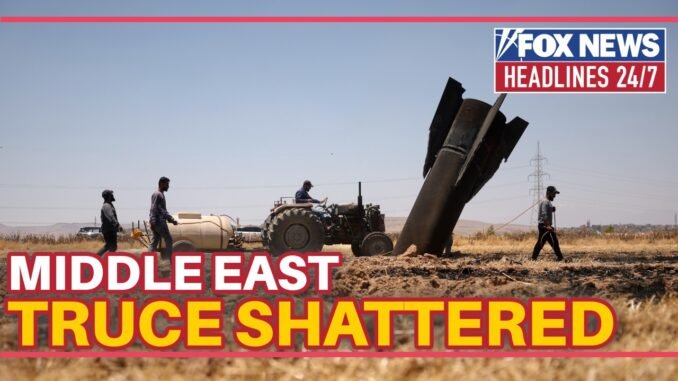

Summary: Tensions escalate in the Middle East as Israel and Iran trade military strikes while Yemen’s Houthi rebels join the fray, threatening fragile ceasefire agreements and raising fears of regional war.
The already fragile peace in the Middle East is under serious threat as Israel and Iran have engaged in direct military confrontations, with Yemen’s Houthi rebels adding to the escalating tensions by launching missile attacks at Israeli territory.
Breaking Down the Latest Developments
The recent exchange of attacks marks a dangerous turn in regional stability, with multiple parties now actively involved in what many fear could spiral into a full-scale regional conflict. The situation has deteriorated rapidly, catching international observers and peace advocates off guard.
Iran Enters the Fray
Iran’s involvement in the latest round of hostilities represents a significant escalation. The Islamic Republic, which has maintained a complex relationship with various militant groups in the region, has now engaged in direct confrontation with Israeli forces. This move signals a potentially dangerous shift in the dynamics of Middle Eastern conflicts.
Yemen’s Houthi Rebels Join the Attack
Adding another layer to the crisis, Yemen’s Houthi rebels have launched missiles targeting Israeli territory. The Houthi movement, which has been backed by Iran in their ongoing conflict in Yemen, appears to be coordinating their actions as part of a broader regional strategy.
What This Means for the Ceasefire
The ceasefire agreement, which many hoped would bring lasting peace to the troubled region, now hangs by a thread. International mediators who worked tirelessly to broker the peace deal are watching with concern as their efforts appear to be unraveling.
Regional Implications
For Nigerians and the international community watching from afar, this development carries significant implications:
Economic Impact: Oil prices could surge if the conflict intensifies, affecting fuel costs globally, including in Nigeria where petroleum prices are already a sensitive issue.
Humanitarian Concerns: The potential for civilian casualties and displacement remains high as military operations intensify.
Global Security: A full-blown regional war could have far-reaching consequences for international peace and security.
International Response
The international community, including the United Nations, African Union, and various world powers, will likely be called upon to intervene and prevent further escalation. Nigeria, as a significant player in African and international diplomacy, may also be expected to contribute to peace-building efforts.
What Happens Next?
As the situation continues to develop, several scenarios remain possible:
– De-escalation through diplomacy: International pressure could force parties back to the negotiating table
– Limited conflict: The exchanges might remain contained without expanding into full war
– Regional war: The worst-case scenario involving multiple countries in prolonged conflict
The coming days will be critical in determining which path the region takes. For now, civilians in affected areas remain the most vulnerable, caught between competing military forces and political ambitions.
Stay Informed
This is a developing story, and we will continue to monitor the situation closely. The implications of these events extend far beyond the Middle East, potentially affecting global economics, security, and diplomatic relations.
What are your thoughts on this developing crisis? How do you think the international community should respond? Share your views in the comments below.
For more information, check buzzUp9ja
Be the first to comment