
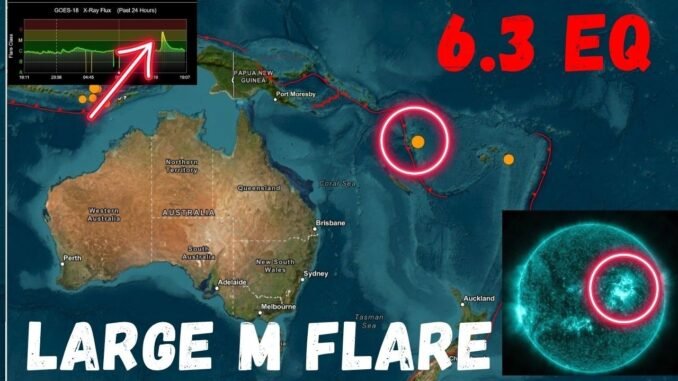

A powerful tremor has shaken the Pacific island nation of Vanuatu, raising fresh concerns about seismic activity in one of the world’s most earthquake-prone regions.
A shallow earthquake measuring 6.3 on the Richter scale struck the Pacific island nation of Vanuatu on Thursday, October 8, according to data released by the United States Geological Survey (USGS) — the global authority on seismic monitoring.
The epicentre of the quake was located approximately 110 kilometres east of the island nation, which sits along the infamous “Ring of Fire” — a horseshoe-shaped zone in the Pacific Ocean notorious for its intense volcanic and earthquake activity.
What Is a Shallow Earthquake and Why Does It Matter?
For those wondering what makes this earthquake particularly significant, the key word here is “shallow.” Shallow earthquakes occur closer to the Earth’s surface, which means they tend to cause far more damage compared to deeper quakes of the same magnitude. Think of it like this — it is the difference between a loud sound going off right next to your ear versus from across a football field. The closer it is, the more you feel it.
A 6.3-magnitude quake is no small matter. On the global scale, anything above 6.0 is considered strong and capable of causing serious structural damage, especially in areas with buildings that are not constructed to withstand such forces.
Where Exactly Is Vanuatu?
Vanuatu is a small island nation located in the South Pacific Ocean, roughly northeast of Australia. Though it may not frequently make headlines in Nigeria, the country is no stranger to seismic events. It experiences earthquakes regularly due to its location on the Ring of Fire, making it one of the most geologically active places on Earth.
Why Should Nigerians Pay Attention?
Now, you might be asking — “This happened in the Pacific Ocean, what does this have to do with us in Nigeria?”
Fair question. While Nigeria is not located on any major tectonic fault lines and does not experience earthquakes of this scale, global seismic events serve as important reminders of nature’s raw power and unpredictability.
Moreover, with Nigeria’s growing infrastructure development — from high-rise buildings in Lagos to expanding urban centres in Abuja, Port Harcourt, and beyond — understanding building standards and disaster preparedness remains a conversation worth having. Events like the Vanuatu earthquake remind us that investing in resilient infrastructure and emergency response systems is not a luxury but a necessity.
Stay Informed
As more details emerge from the USGS and local Vanuatu authorities regarding casualties, damage assessments, and any potential tsunami warnings, we will continue to bring you updates.
Have thoughts on this story? Drop them in the comments section below. And remember to share this article with your network — staying informed is the first step to staying prepared.
Follow buzzUp9ja for more stories
Be the first to comment