
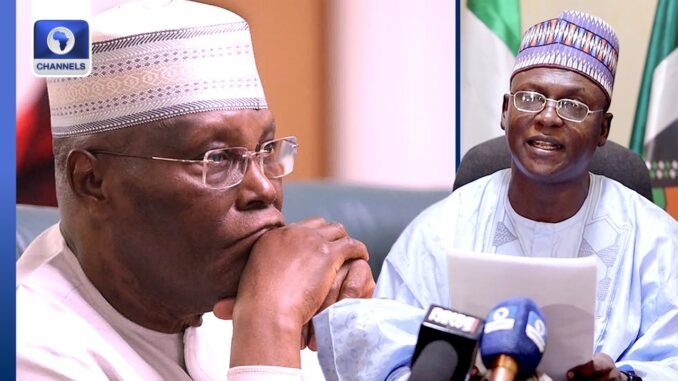

Summary: Drama unfolds in Adamawa as ADC faction suspends former VP Atiku Abubakar and Babachir Lawal amid internal party crisis ahead of 2027 elections.
The internal crisis rocking the African Democratic Congress (ADC) has taken a dramatic new twist as a faction of the party in Adamawa State moved to suspend two of Nigeria’s most prominent political figures—former Vice President Atiku Abubakar and ex-SGF Babachir Lawal.
The suspension, announced on April 13, marks a significant escalation in the power struggle currently tearing through the opposition party, raising fresh questions about its cohesion ahead of the 2027 general elections.
What Led to the Suspension?
According to the Adamawa State faction of the ADC, the decision to suspend Atiku and Babachir stems from alleged anti-party activities and actions deemed detrimental to the party’s interests. The faction accused both political heavyweights of working against the collective vision of the party and engaging in activities that undermine its unity.
While specific details of the alleged infractions remain sketchy, political observers suggest that the move reflects deeper fractures within the ADC’s leadership structure, particularly concerning the party’s direction and strategy for the 2027 presidential race.
Atiku’s Political Journey
For Atiku Abubakar, who served as Nigeria’s Vice President from 1999 to 2007, this latest development adds another chapter to his long and often turbulent political career. The Turakin Adamawa has contested for the presidency multiple times and has been associated with several political parties throughout his career, including the PDP, AC, ACN, and most recently, joining forces with the ADC coalition ahead of 2027.
His suspension from the ADC faction in his home state of Adamawa is particularly significant, given his strong political base in the North-East region.
Babachir Lawal’s Role
Babachir Lawal, who served as Secretary to the Government of the Federation under President Muhammadu Buhari before his controversial removal, has been a vocal critic of the current administration. His alliance with Atiku and involvement in opposition politics has made him a target of political opponents within and outside the ADC.
What This Means for Nigerian Politics
This suspension raises several critical questions:
1. Is the ADC Coalition Crumbling?
The ADC has been positioning itself as part of a formidable opposition alliance ahead of 2027. Internal divisions like this could weaken its bargaining power and electoral prospects.
2. Will Atiku Contest the Suspension?
Given his political clout and legal resources, many expect Atiku to challenge this suspension through the party’s internal mechanisms or the courts.
3. Impact on 2027 Elections
With less than three years to the next general elections, opposition parties cannot afford prolonged internal crises. This development may force realignments across Nigeria’s political landscape.
Reactions from Party Members
As expected, reactions to the suspension have been divided along factional lines. Supporters of the suspended leaders have dismissed the action as illegitimate, arguing that the faction lacks the constitutional authority to suspend national figures of such magnitude.
Meanwhile, those behind the suspension maintain that no one is above party discipline, regardless of their status or previous positions.
The Bigger Picture
This latest drama in the ADC is symptomatic of a broader challenge facing Nigeria’s opposition parties—the struggle to maintain internal cohesion while presenting a united front against the ruling party. History has shown that divided opposition parties rarely succeed at the polls, a lesson that seems lost on many political actors.
As the 2027 elections draw closer, Nigerians will be watching keenly to see whether the opposition can resolve its internal differences or whether these crises will hand another easy victory to the ruling All Progressives Congress (APC).
What Happens Next?
The coming weeks will be crucial in determining the future of this crisis. Will the national leadership of the ADC intervene? Will Atiku and Babachir seek alternative political platforms? Or will reconciliation efforts save the day?
One thing is certain: in Nigerian politics, today’s enemies can become tomorrow’s allies, and vice versa. The final chapter of this story is far from written.
Stay connected with us for more updates on this developing story and other political news shaping Nigeria’s future.
Check buzzUp9ja for more info
Be the first to comment