
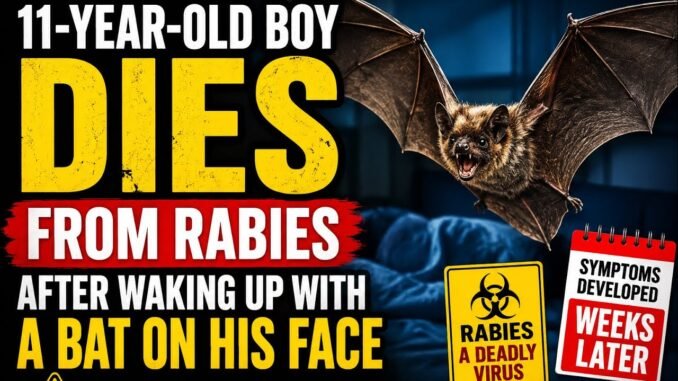

Waking up to find a bat lying across your nose and mouth sounds like a scene from a movie — but for one 11-year-old boy, it became a fatal reality. Reports say he died from rabies just 19 days after that encounter, even though there was no obvious bite mark. This heartbreaking story is a powerful reminder: with rabies, speed and knowledge save lives.
Quick facts about rabies
– Rabies is almost always fatal once symptoms start — but it is 100% preventable with prompt post-exposure care.
– It spreads through saliva from infected animals, commonly dogs and bats, through bites, scratches, or when saliva gets into the eyes, nose, or mouth.
– Bites from bats can be tiny and painless. You may not even notice them.
– Children are at higher risk because they play with animals and may not report minor bites or contact.
How bat exposure can cause rabies
You don’t need a deep bite to get infected. If a bat’s saliva touches your:
– Broken skin (even a small scratch), or
– Mucous membranes (eyes, nose, mouth),
the virus can enter. That’s why waking up with a bat on your face is treated as a medical emergency globally — same energy we should keep here in Naija.
What to do immediately after any bat or dog exposure
– Wash, wash, wash: Rinse the area thoroughly with running water and soap for at least 15 minutes. This simple step can reduce the risk dramatically.
– Don’t delay care: Go straight to a hospital or clinic that can start rabies post-exposure prophylaxis (PEP). Time is critical — do not “wait and see.”
– Avoid home remedies: No engine oil, pepper, or herbs on the wound. They don’t work and can worsen things.
– Keep the animal away from people: If safe, contact local vets or authorities for guidance. Do not attempt to catch a bat with bare hands.
Where to get help in Nigeria
– Visit the nearest government hospital, teaching hospital, or well-equipped private facility and ask specifically for rabies PEP (vaccine, and where indicated, rabies immunoglobulin).
– Contact your State Ministry of Health or visit ncdc.gov.ng for guidance. Report exposures, especially to children.
– Veterinarians can advise on animal vaccination and observation where applicable.
Protect your home and community
– Vaccinate your dogs and cats every year. Keep vaccination cards up to date.
– Avoid handling bats. If bats roost in your roof/eaves, seal entry points and seek professional removal — don’t DIY with bare hands.
– Teach children to:
– Never touch bats, stray dogs, or unknown animals.
– Report any scratch, lick on broken skin, or contact with the eyes/nose/mouth.
– Community action matters: Support local dog vaccination campaigns, discourage free-roaming dogs, and report suspected rabid animals (signs include aggression, drooling, paralysis, or unusual behavior).
Myths vs facts
– “No bite, no problem.” False. Saliva to eyes, nose, mouth, or tiny bites you can’t see still pose a risk.
– “I’ll be fine if I clean it with spirit only.” Incomplete. Washing with soap and running water plus urgent medical care is the standard.
– “Rabies is rare, so I won’t worry.” Nigeria still records rabies risks, especially from dogs. Don’t take chances.
The bottom line
The boy’s tragic death — just 19 days after waking up with a bat on his face — shows how unforgiving rabies can be. If there’s any chance of exposure to a bat or dog, act fast:
– Wash thoroughly with soap and water for 15 minutes.
– Seek rabies PEP immediately — don’t wait for symptoms.
– Keep pets vaccinated and children informed.
With quick action and community awareness, rabies is preventable. Your speed could be the difference between life and loss.
For more information, check buzzUp9ja
Be the first to comment