
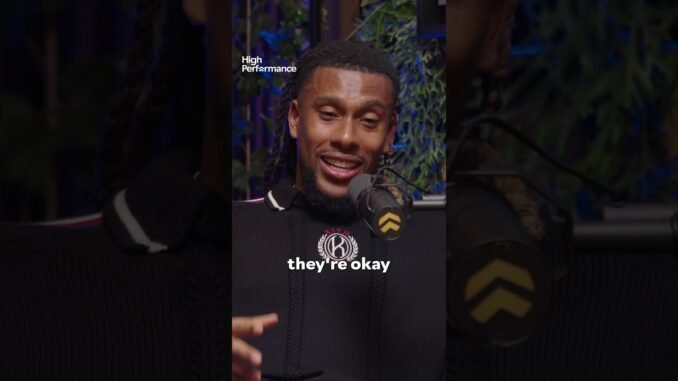

Summary: Fulham star Alex Iwobi reveals the stark contrast between Nigeria’s Super Eagles and England’s national team setup, from booking flights to training facilities. His honest account sheds light on the challenges Nigerian footballers face.
—
Super Eagles midfielder Alex Iwobi has pulled back the curtain on the glaring differences between representing Nigeria and England at international level, painting a picture that many Nigerian football fans will find both familiar and frustrating.
The Fulham star, who was born in Lagos before relocating to England at just four years old, recently shared candid insights into his experiences with both national teams—and the contrast couldn’t be more striking.
From St George’s Park to DIY Travel Arrangements
Speaking in an interview with High Performance, Iwobi didn’t mince words about the organizational gulf between the two setups. While his time with England’s youth teams (he played up to the under-18 level) was characterized by military-style precision, his introduction to the Super Eagles was, shall we say, more adventurous.
“Playing for England and playing for Nigeria are very different,” Iwobi explained. “England is a bit more strict. In St George’s Park National Football Centre or in a hotel, no one is allowed to come in, strict food, strict regime—that is it.”
But Nigeria? That’s where things get interesting—and not always in a good way.
“Nigeria now, sometimes your flight is not booked properly. You have to book your own flight,” the midfielder revealed. “You get there, and sometimes the people at the airport are not ready to pick you up, so you have to make your own way.”
If you’re a Nigerian reading this, you’re probably nodding your head knowingly. We’ve all had that experience of things not quite going according to plan, haven’t we?
NEPA Strikes Again—Even at National Team Camp
Perhaps the most relatable part of Iwobi’s account is his description of accommodation challenges that every Nigerian has faced at one point or another.
“The hotels are OK. Sometimes the light goes out, sometimes you do not have anywhere to charge your phone,” he said, describing a scenario that sounds like a typical Saturday afternoon in Lagos, Abuja, or anywhere else in Nigeria where PHCN decides to flex its muscles.
Meanwhile, in England, the setup is completely different. “No one is allowed in the hotel,” Iwobi noted. But in Nigeria? “People can come into your room whenever they want.”
Training on Half Grass, Half AstroTurf—With Sand on the Side
The infrastructure differences extended to training facilities as well. Iwobi recalled his first experience with Nigeria’s under-23 team, where the pitch “would have half grass, half AstroTurf, and maybe a bit of sand on the side.”
It’s the kind of makeshift arrangement that would horrify European football administrators but is par for the course in many African countries, where resourcefulness often trumps resources.
And the coaches? They had their own unique motivational style. “If you mess up a pass, you don’t just get told off—you have to do a lap around the pitch,” Iwobi said.
Why He Chose Nigeria Despite the Challenges
Given all these challenges, why did Iwobi ultimately choose to represent Nigeria over England?
The answer is deeply personal and rooted in family and identity.
Initially, the midfielder was hesitant. It took considerable persuasion from his father and uncle to even give Nigeria a trial run with the under-23 team. “My uncle and my dad said, just at least try once with Nigeria. So I tried the under-23s just to see, and then I could compare what I prefer.”
But despite the logistical nightmares, dodgy pitches, and power outages, Iwobi has no regrets about his decision.
“It took a lot of convincing at the time, but I have no regrets,” he declared. “I did love England, but because I grew up in a Nigerian household, Nigeria has always been a part of me.”
Since making his Super Eagles debut in October 2015, Iwobi has become one of Nigeria’s most consistent performers, bringing his Premier League experience and quality to the green and white jersey.
What This Means for Nigerian Football
Iwobi’s revelations, while honest, highlight the work still needed within the Nigeria Football Federation (NFF) to match international standards. When players have to book their own flights and deal with unreliable logistics, it’s no wonder Nigeria sometimes struggles to attract and retain dual-nationality players.
Yet despite these challenges, the Super Eagles continue to produce talented players who choose heart over convenience, passion over comfort. That’s the Nigerian spirit—we make magic happen even when the lights go out.
Iwobi’s story is a testament to that resilience, and his commitment to Nigeria despite the easier alternative speaks volumes about the pull of identity and heritage.
What do you think about Iwobi’s revelations? Should the NFF be doing more to improve conditions for our national team players? Drop your thoughts in the comments below!
Get more details on buzzUp9ja
Be the first to comment