

Summary: US intelligence reveals Iran hasn’t attempted to rebuild its nuclear facilities after the February 2025 joint strike, contradicting President Trump’s recent claims about imminent threats.
The United States intelligence community has made a significant revelation that challenges the narrative coming from the White House regarding Iran’s nuclear capabilities.
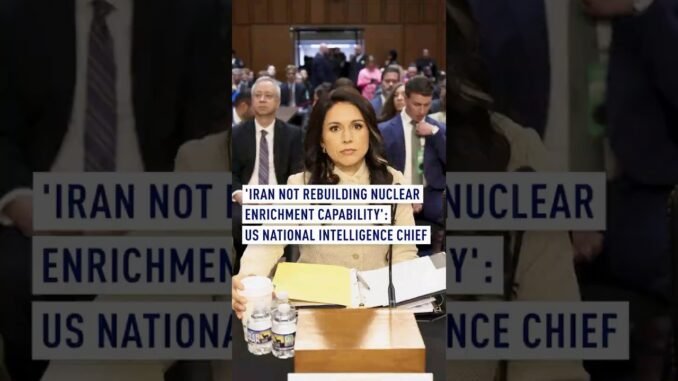
According to Director of National Intelligence Tulsi Gabbard’s written testimony to the Senate Intelligence Committee, Iran has made no attempts to rebuild the nuclear enrichment infrastructure that was destroyed during Operation Midnight Hammer – a joint US-Israel military strike carried out in February 2025.
What the Intelligence Report Says
In her written submission to the Senate as part of the annual threat assessment, Gabbard was clear and direct: “As a result of Operation Midnight Hammer, Iran’s nuclear enrichment programme was obliterated. There has been no effort since then to rebuild that capability.”
This assessment stands in sharp contrast to claims made by President Donald Trump, who has repeatedly insisted that the February 28 strike was necessary due to an “imminent threat” from Iran’s nuclear programme.
A Tale of Two Testimonies
Interestingly, while the finding appeared in Gabbard’s written testimony, she did not mention it during her oral presentation before senators. When questioned about this omission, the intelligence chief cited time constraints but notably did not contradict the written conclusions.
This discrepancy between written and oral testimony has raised eyebrows among observers, particularly given the politically sensitive nature of the assessment.
Mounting Questions About the Strike’s Justification
President Trump has maintained that Iran was dangerously close to developing nuclear weapons, a position that many international analysts and security experts have questioned. These claims came even as diplomatic negotiations were reportedly ongoing before the strike.
The situation became more complicated when a senior aide to Gabbard resigned, claiming there was no imminent threat and alleging that the president had been misled by skewed intelligence interpretations and external pressures.
Iran’s Current State
Despite the intelligence assessment about nuclear rebuilding, Gabbard acknowledged that Iran has suffered substantial damage from weeks of coordinated attacks. The country has experienced:
– Significant losses in military leadership
– Degraded military capacity
– Operational challenges across various sectors
However, she emphasized that the Iranian government continues to function despite these setbacks.
Long-term Concerns Remain
While Iran may not be rebuilding its nuclear programme, US intelligence officials warn that the country’s broader military infrastructure, though weakened, remains operational. The assessment suggests Iran could potentially attempt a long-term reconstruction of its conventional military capabilities, including:
– Missile programmes
– Drone technology and production
– General military infrastructure
What This Means for Nigeria and Africa
For Nigerian observers and African nations watching the situation, this development underscores the importance of accurate intelligence in international relations and military decision-making. It also highlights how intelligence assessments can sometimes diverge from political narratives.
The situation serves as a reminder that military actions have far-reaching consequences, and the justifications for such operations must be carefully scrutinized by international communities, including African nations that value sovereignty and diplomatic solutions.
The Bigger Picture
This intelligence revelation adds another layer to the ongoing debate about the use of military force in international relations and the role of intelligence in shaping foreign policy decisions. As the situation continues to develop, questions about accountability and transparency in decision-making processes remain at the forefront.
For now, the US intelligence community’s assessment provides a clear picture: whatever threat Iran’s nuclear programme may have posed before Operation Midnight Hammer, it is not currently being rebuilt.
Stay tuned for more updates on buzzUp9ja
Be the first to comment